Campus UNICEF Book Review: Almost Home

Trigger Warnings: Please note that the following reviews will contain information about sexual assault, sex trafficking, drug and alcohol abuse, and self harm.

Kevin Ryan and Tina Kelley’s Almost Home: Helping Kids Move from Homelessness to Hope familiarizes us with the life stories of six young people, who felt a lack of belonging at certain phases in their lives. It places emphasis on the various struggles they went through in early childhood and adolescence, and how they used the lessons learned to better themselves. Covenant House (a charity that looks after the well-being of homeless and trafficked youth)  played a massive role in their improvement. The issues that this non-fiction sheds light on include family violence, prostitution, teen parenthood, rejection based on sexual orientation, and aging out of foster care without a family. In addition to the heartbreaking yet inspirational stories from the youth, the book reveals a set of alarming statistics with regards to the issues, making it all the more important to raise awareness about homelessness and the dangers affiliated with it. 

Chapters 1 & 2: Review Written by Zuairia Shahrin

The first chapter of the book gives us an insight into Paulie Robbins’ life. Paulie was adopted by Hank and Tiffany. Hank, Paulie’s adoptive father, was a crab fisherman, who used to go out to the sea for work. His absence was described as a “mixed blessing” in the sense that outdoors, Hank was full of joy and bliss. However, when indoors, the family often witnessed the most unpleasant sides of him. One day after a fight, Tiffany decided to part ways with Hank, who had left the trailer at the fit of rage, and start a life with Ben, whom she met online. Observing that Ben was the complete opposite of Hank, and that he effortlessly entered Tiffany’s life made Paulie skeptical. It was not until Ben had to go back home to Alberta, due to the death of his estranged wife, that Tiffany made up her mind to move in with him. Because of this decision, Paulie and his little sister Casey spent several weeks with their friends. After coming to know about all this, Hank convinced Casey to live with him while Paulie chose Tiffany. 

Until he could move to Alberta with Tiffany and Ben, Paulie had to live with a friend of Tiffany’s, where he was exposed to a wide range of substances that led his life to spiral downwards. As his experimentation with drugs progressed, his anger -management issues escalated, leading him to be expelled from school. When moving to Canada after that, Paulie noticed how well Tiffany had fit in with Ben’s family, and how he was no match for them. Feeling out of place, and like a “houseguest”, he continued taking drugs in larger doses. His behavior completely transformed for the worse, and he wanted to go back to Hank. This compelled Tiffany to turn him to the police, and him having the ugliest fight with Hank. His involvement with drugs finally sent him to Covenant House, where he had Mildred Mack as his primary counselor. 

As a disheartened Paulie complained about feelings of abandonment, family violence and the longing of a birth mother he never met, Mildred was certain that he was in need of serious counseling. Mildred kept pushing Paulie to improve his life by completing his high school diploma and finding a suitable part-time job, but Paulie kept on ignoring her. He left the shelter, went back to Hank and got beaten, made his way back to drugs, and then went back again to the shelter – this repeated several times. Covenant House even eased restrictions for him to support him more, but that also did not help, and Paulie fled. When he went back to the shelter yet again at the age of nineteen, he was much changed – he had his high school diploma. Though not fully willingly yet, Paulie started paying heed to Mildred’s words and owned up to his mistakes. He worked two jobs, made a career in kickboxing and overcame drug abuse. 

The second chapter demonstrated how family violence can negatively affect young minds, to the extent that it leads them to drug abuse. It further highlights how young people, when not in touch with their sense of belonging with the people around them, can feel as though they do not belong anywhere, when in fact that is untrue. Feeling a sense of belonging is as important as having security; being one of the necessities that a human cannot survive without emotionally, it has the potential to determine what choices they make in their lives. When this very feeling is snatched away from them, at no fault of their own, they are bound to feel abandoned. However, Paulie’s transformation from being a drug addict to having a stable, disciplined life is remarkable, and sets an example that, with the right kind of support and willpower, homeless youth can also make a life for themselves that they admire. 

This chapter zooms into Muriel’s life, who was born in Manila, Philippines, and was adopted by a Canadian family. Her birth mother had nine children and was not able to fend for her, and she suffered from malnourishment and intestinal parasites. However, she was beautiful, and by nature, wild. This was not common for her adoptive parents. Barely seeing her adoptive father, she thought he left the family because of her, and saw how different she was from her brothers. While her mother tried to make her more graceful, she could barely sit still anywhere. As she grew older, Muriel started becoming more rebellious. The fact that she was different from her family was not taken well by her, and she was sent to the Philippines to spend some time with her biological family. As she dreaded her time in the Philippines and was longing to go back to Canada, she became more depressed. When she went back to Canada, it was pretty clear to her family that Muriel had not changed at all. She continued with substance abuse, and even cut herself. 

Feeling as though she was unworthy of feeling any happiness, she lost herself in drugs, which also invited other troubles into her life. Before she realised it, she was drawn into the world of sex trafficking. She was desperate for drugs, which came with a huge sum of money – money that was easily available if she worked for pimps. Her mother sent her to a rehabilitation center, but she got expelled and landed in Covenant House. Within a month and a half, a fight with her mother caused her to leave the shelter and enter the escort business. A friend of hers introduced her to a pimp, who gave her GHB (a date rape drug) with cocaine, which she craved, and lured her. The pimp made her work for several men who exploited her body in all sorts of unimaginable ways. 

Three months later when Muriel returned to Covenant House, she was more scared than ever. Her pimp posed various threats, scarring her mind to the extent where she was not addressing her addiction and drug problems, until she met Crystal, who she knew from a safe house she stayed at some time ago. She could relate to Crystal more than she could to anyone else in the shelter, and opened up to her about how pimps treat young girls. She revealed that she felt a desperate need to earn money from glamorous parties where she was forced to work, while also taking drugs which helped her detach from her pain. Though talking to Crystal took a lot of weight off Muriel’s chest, it was not enough to cure her. She was diagnosed with Fetal Alcohol Spectrum Disorder (FASD) which impaired her mind from making sensible decisions. It provided a perfectly valid explanation for her actions, but Muriel was unable to accept the truth. To further it, her mother’s reluctance to invite her back home pierced her mind even more. 

Soon after, Muriel decided to go back to the escort business as she did not know if she was ready to give up the drugs and the money. Once again, she was exploited in numerous different ways. Her pimp invaded her private life, kept her on a strict diet, not letting her sleep until she had turned a trick, constantly drugging her with GHP and compelling her to do everything she did not want to do. Muriel saw a friend of hers turn more distrustful as she worked in the escort business, and finally realized the damaging counterparts of the job. Leaving prostitution for good this time, she went back to Covenant House and took steps to recover from addiction, complete her high school education and become a ballerina. 

This chapter shed light on how young women have been trafficked in the past, and how sex trafficking still persists today. As a young woman myself, reading Muriel’s story shattered my heart. I cannot imagine myself in such a position, and never want to see another woman suffering like this. The mere thought of a young woman’s body being exploited shakes me to my core, and I cannot even begin to think about the devastating pain that must come when one is placed in situations like this. However, Muriel, and all other sexual assault and sex trafficking victims and survivors have my boundless respect – going through something as ghastly and heinous as sexual exploitation is beyond what most people can tolerate, and speaking up and acting against it serves as an even bigger example of courage. 

Chapter 3: Review Written by Georgia Korfeh

Benjamin Baker’s experience through the foster care system and becoming a first-generation college graduate was really inspiring. His story reveals the reality of how disadvantaged homeless and foster youth are, the various abuses they experience and the frequency of their interactions with the youth criminal justice system. Chronological age should not determine whether a youth should be deemed capable to be independent and removed from the foster system. Youth need ongoing support, a GED or high school diploma, a job and social bonds before being fully released from the system, or else they risk failing to integrate into society with higher risks of homelessness or prison time. With strong supportive relationships with one of the group home supervisors Mr. Todd and his friend from college Joey, as well as the discovery of Christianity and football, Benjamin’s story illustrates how all three factors – and some luck – contributed to life changing success. Furthermore, his story reveals the necessity of policy changes in Texas concerning children in foster care. There is a crucial need to streamline the adoption processes and monitor abuse taking place in foster homes. Research showed that children who overstayed in foster care, without adoption, experienced the most emotional harm (Sastyk, 2014).  Although research also supports placing children with close relatives and family to maintain stability and develop healthy family relationships, Benjamin could not due to the dysfunction of his family. In his case, he was better off being raised outside the home and developing a kinship bond with Joey’s family.

References:

Sastyk. 2014. How long should kids stay in foster care? Scienceblogs

Chapters 4 & 5: Review Written by Amir Ali Adel

Almost Home is a heartbreaking yet inspiring and optimistic work of literature that portrays the realities of youth homelessness in North America. Although I encourage you to read all chapters, in my review, I focus on Chapters 4 and 5. The common thread in all chapters is the important contribution of the Covenant House to the lives of homeless youth.

Chapter 4 tells the story of a young single mom, Creionna, who bravely raises her boy, Dominic, despite growing up in a chaotic family. Her challenges are exacerbated when Hurricane Katrina hits New Orleans, killing more than nineteen hundred people. One aspect of Creionna’s story that resonated with me is her significant determination to save Dominic and herself from homelessness. From the time she settles in the Covenant House until the end, she is always moving forward to find her path. I found the climax of the story the moment when Creionna graduates from high school and attends prom: “Creionna looked in the mirror, she saw a beautiful young lady with a cheerful face with a deep kindness to it and, suddenly, a new glamour” (135). While graduation from high school may not be a great deal for many of us, for Creionna, graduation meant being one step closer to liberating herself and her boy from homelessness. 

Chapter 5 is extraordinary in that two stories run parallel to each other and cross one another in the Covenant House. The stories are about Keith and Jim, born in different families and environments. Jim’s family is consumed by a devastating neurological disease, Huntington’s Disease. He finds meaning in helping the youth and becomes one of the pioneers of the Right of the Passage program in the Covenant House. This essential program provides transitional housing for youth homeless and has affected the lives of many including almost everyone in this book. Keith, on the other hand, faces unbelievable challenges as a child. Several times, he falls into the darkness of addiction and despair. Through the power of mentorship, Jim is able to guide Keith to the right path. If I were to choose one moment that summarizes this chapter I would choose: “Two men [Keith and Jim] whose fathers died tragically. Spiritualists yearning for God’s grace in their lives. Boys who had pinned to put their families back together. Encouraging each other, believing in each other. Making their imperfect road less grueling by walking it together.” (175). It is difficult to reinstate the power of mentorship for homeless kids. Keith’s story brought home this point for me.

Chapter 6: Review Written by Ashwath Puchakatla

Chapter six details the story of Meghan, a resident of the Covenant House of Mexican descent, and her struggle with the intertwining conflict of her family, homelessness, and her sexual orientation. From a young age, she endured an absentee father, shifting maternal figureheads, and the responsibility of helping her grandmother take care of her younger siblings. In 2009, following a couple of temporary evictions due to her grandmother’s disapproval of her behavior, Meghan was kicked out of the place she called home after a heated argument regarding her sexuality. Despite her pleas to her family, Meghan was ultimately turned away, ultimately taking residence at the Covenant House. Throughout their retelling of Meghan’s story, Ryan and Kelley relate how Meghan is one of many LGBTQ+ individuals who have had to go through familial rejections and have been forced to live on the streets due to an innate aspect of their identity of which they had no ability to choose. This has unfortunately led them to be at higher risk for homelessness, physical and mental health ailments, sexual harrassment, and victims of violence. 

At the Covenant House, Meghan began to try to change her life around, building new relationships and enrolling in massage therapy school to gain her certification. However, it was not long before Meghan’s family began to call her, and requested financial assistance. The pull from her family culminated in Meghan’s dropping out of school, leaving Meghan in thousands in loan debt. In a later visit with her grandmother, Meghan was extended an olive branch, and was invited back to the family home. While the chapter ends fairly ambiguously on what Meghan’s decision is, Ryan and Kelley leave no ambiguity on what changes families need to make in order to prevent more individuals who identify with a sexual minority on the street; mainly, the family must foster an accepting environment, one where the individual is able to express their identity without the fear of being abandoned. However, in cases where the individual is rejected by their family, there should be safeguards in place, such as accessibility to affordable housing, measures against inequity and ease of access to public support systems. These safeguards would allow those sexual minorities at risk of homelessness an opportunity to land on their feet; this is especially significant to sexual minorites, as they are already at risk for many of the vulnerabilites that arise from being homeless, such as mental and physical illnesses, abuse and targeted violence.

Overall, while Meghan’s story shares characteristics to many that have come before and to many that may come after, it is ultimately a story of a unique individual finding themselves and a place to call home despite the adversities thrown at them. Meghan’s story is one of hope, where its central character is able to provide herself with opportunities to improve her life, and the ability to choose which path she wants to take in life.

References:

Clay, R. (2018). Sexual and gender minorities are at higher risk. Retrieved 2 December 2021, from https://www.apa.org/monitor/2018/06/ce-corner-risk

Homelessness. (2021). Retrieved 2 December 2021, from https://depts.washington.edu/triolive/ quest/2007/TTQ07033/effects.html

Gaetz, S., Schwan, K., Redman, M., French, D., & Dej, E. (2018). The Roadmap for the Prevention of Youth Homelessness. A. Buchnea (Ed.). Toronto, ON: Canadian Observatory on Homelessness Press.

Ryan, K., & Kelley, T. (2012). Almost Home: Helping Kids Move from Homelessness to Hope. Wiley.

Sexual and gender minorities face unique health risks – Harvard Health. (2021). Retrieved 2 December 2021, from https://www.health.harvard.edu/womens-health/sexual-and-gender- minorities-face-unique-health-risks
Smith, D., Johns, N., & Raj, A. (2020). Do Sexual Minorities Face Greater Risk for Sexual Harassment, Ever and at School, in Adolescence?. Journal Of Interpersonal Violence. doi: 10.1177/0886260520926315

Chapter 7: Review Written by Erica Kim

Chapter 7 of Almost Home explores the story of Frankie, who as a teenager gave birth to her son, Paulie, and subsequently lost him to adopting parents after struggling to raise him in poverty. The author insightfully points out that many of the hardships Frankie and Paulie had to go through would have been preventable if there were shelters for teenagers with babies. In addition to the lack of such shelters, the inability to keep track of her son’s whereabouts after his adoption makes homeless teen mothers like Frankie feel hopeless. Although Frankie and Paulie were able to unite after decades, out of pure luck and coincidence, there is still an uneasiness between them. Love and trust within the family stand firm only when it accumulates over a long time, and this was stripped away from Paulie and Frankie. This impedes Paulie from completely opening up to Frankie about his inner wounds from previously misunderstanding that he was abandoned in a shelter by his biological mother. Perhaps, Paulie wants to keep the peace with his mother after just reuniting. Nonetheless, the story alludes to hope — one day, Paulie will be able to disclose his deeply covered wounds. The title of the chapter, “Separate Paths Uniting” perfectly summarizes the story as the present tense indicates that Frankie and Paulie are still in the process of uniting even after being physically closer to one another.

The subsequent chapter, which is the last chapter, is not a story of someone, but rather a list of ways to help homeless youth: mentoring, anti-trafficking efforts, and supporting LGBTQ youth, among others. Almost Home allows readers to empathize with the characters’ hardships of living in poverty and encourages the readers to take part in lessening the burdens of homeless youth.
Decolonization of Education: The Alberta UCP Curriculum Draft

On Episode 3 of Unicef Talks, Georgia Korfeh and Anson Wong take a more in depth look at the UCP Draft Curriculum. We explore the ideas of tokenism, whitewashing history, and whether or not the UCP government will make the necessary modifications given the mounting criticism by the Alberta Teachers Association.

Partners:
Ashare: to learn how to better pay back your student loans, visit https://www.ashare.io/

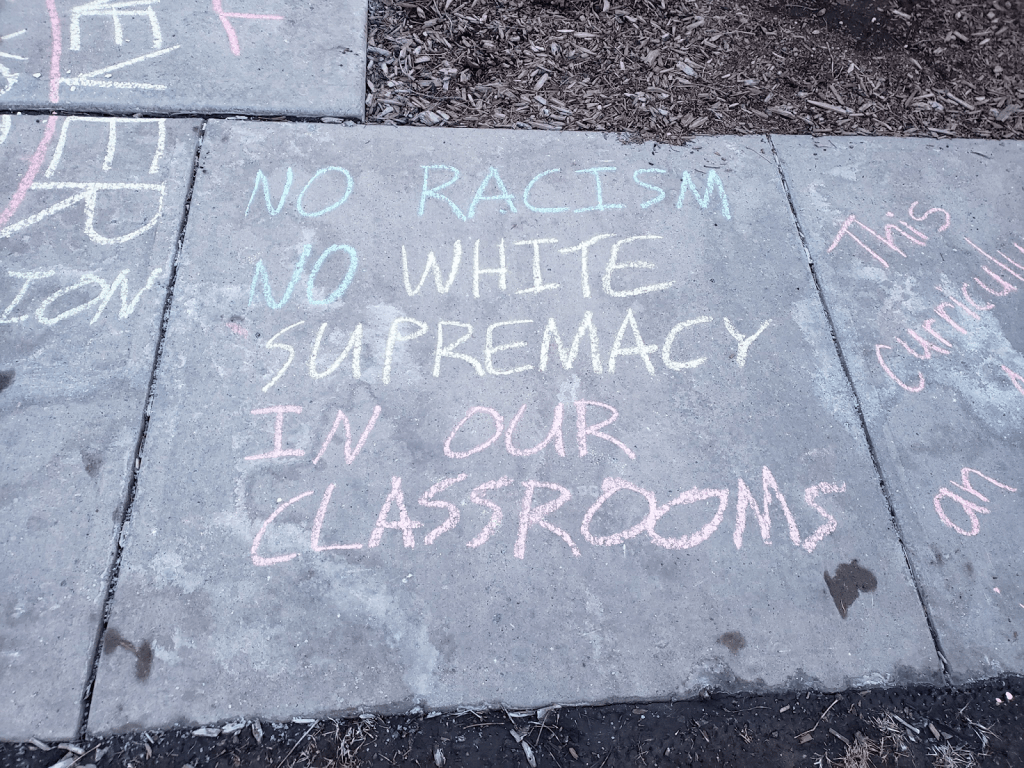
The Alberta UCP’s K-6 curriculum draft produced a lot of controversy with the public and with Alberta’s teachers. Teachers and parents expressed feelings of frustration, anger and disappointment because they felt that the curriculum was racist and effectively omitting important lessons in history. The Edmonton school board asked education minister Adriana LaGrange to rewrite the K-6 curriculum and halt the pilot program. As a response, the Alberta’s Teachers Association established a professional curriculum titled the “Analysis and Critique of Alberta Education’s 2021 Draft K-6 Curriculum”. Furthermore, they developed and analyzed fourteen key findings and my paper will focus on two out of the fourteen. 

Unfortunately, the perspectives, contributions and histories of Indigenous peoples are often forgotten in Alberta’s education system. As a commitment to truth and reconciliation, the Alberta government promised to include “mandatory content for all Alberta students on the topics of residential schools and treaties (The Alberta Teachers’ Association, 2021, p 30)” and “a kindergarten to Grade 12 curriculum development standard.” Additionally, to accurately reflect the Indigenous perspectives, the curriculum process involved five Indigenous representatives as advisors from August 20 to November 2020. However, signed NDAs prohibit the representatives from commenting on the process and their experiences. Moreover, their contribution does not reflect an endorsement of the UCP draft curriculum. This leads to my first analysis of one of the key findings: “The inclusion of Indigenous content that is not authentic and appears as tokenism.” The consultation of five Indigenous representatives was a weak attempt at reflecting Indigenous history accurately. Simply said, Indigenous history and stories should be written by Indigenous peoples. It is not the role of the UCP government to determine how Indigenous culture, history, and stories should be told because it does not belong to them. Additionally, the draft curriculum “does not always encourage a positive perspective toward these cultures (The Alberta Teachers’ Association, 2021, p 30).” Indigenous peoples are reflected through an ethnocentric lens that presents their identities as savage and British colonialism as a natural consequence of needing to civilize them. In this way, the curriculum promotes very western Eurocentric ideals. In the grade 6 daft curriculum, the Indigenous perspective is effectively precluded from the events of the War of 1812 and the Battle of the Plains of Abraham. Certainly, this absence is a bias. When the UCP government is criticized for this white washing of history, they consistently refer to the five Indigenous representatives they consulted. However, respectful Indigenous participation should have required the consultation and participation of Indigenous communities and Elders. The Alberta Teachers’ Association explains that the community should decide who speaks for them and how the information is reflected. Successful participation would conclude with Indigenous communities championing the draft curriculum and public enthusiastic endorsement.

Similar to the first key finding I analyzed, the second key finding critique of the Alberta draft curriculum is the “lack of respect for Alberta’s diversity and support for a peaceful, pluralistic society.” In The Guiding Framework for the Design and Development of Kindergarten to Grade 12 Provincial Curriculum (2020), the government outlines that the curriculum should recognize the different cultures, ethnicities, and many linguistic groups in Canada. As a pluralistic society, Canada recognizes the importance of respecting and understanding the different experiences, backgrounds, and faiths of different groups. However, in the Alberta Teachers’ Association online survey, teachers do not think that the draft curriculum represents a variety of beliefs in our plural society nor does the draft curriculum respect Alberta/Canada’s diversity. One of the teachers commented that “the social studies content is horrendous. Many outcomes are Eurocentric and seem to promote xenophobia and racism (The Alberta Teachers’ Association, 2021, p 43).” Furthermore, the curriculum has a clear Christian perspective by using Christian references and overtones throughout. This fails to show equal respect for all religions and is not appreciative of Alberta’s diversity. Although the Alberta guidelines asserts that the curriculum promotes an inclusive education system, the draft curriculum fails to mention the perspectives of non-Christian experiences and other diverse groups’ contributions to the development of Canada. The Alberta Teachers’ Association Report also mentions the constant use of the term’s truth, high arts, high literature, and beauty and goodness, but the curriculum fails to establish whose perspective we’re viewing these terms from. These terms are thus promoting a singular view of the world, which is again, a white Christian lens. Essentially, the Guiding Framework and the draft curriculum contradict. One advocates for pluralism and respect for diversity whilst the other mentions people of different faiths, experience, and backgrounds but with a Christian bias and Eurocentric perspective. Lastly, the acknowledgment of racism experienced by different groups in Canada does not acknowledge the continued existence of racism and discrimination today. “It claims that many people overcame racism, but that does not mean that racism has disappeared (The Alberta Teachers’ Association, 2021, p 45).” This failure to recognize the consequences of racism allows it to persist. The draft curriculum does not show students how to critically examine racism or how to develop ways to end systemic racism in Alberta. Not confronting racism is anti-pluralism. 

The exclusion of certain lessons in history and the emphasis placed on the Christian perspective can be explained using author J.M Blauts’ (1993) “Colonizer’s Model of the World ” theory. The theory asserts that education is taught through a straight narrow tunnel. The fundamental feature of the Colonizer’s Model of the World is the diffusionist assumption about historical change. History is written and taught by Europeans today in a tunnel of time – the Eurocentric “tunnel of history” – which explains what happened, where, when and why. Everything outside this tunnel can then be effectively forgotten, erased and rendered absent. So, the lack of Indigenous perspectives and the lack of acknowledgment of the continued existence of racism in the draft curriculum is a result of the Alberta government attempting to teach history through their narrow western lens. Since the racist parts of history are not being taught, or are being filtered to be more digestible, subalternized peoples’ (non-white peoples) identities remain silent by the Colonizer’s Model of the World because their perspectives are not being shared or taught. As I mentioned earlier in my paper, the events of the War of 1812 in the draft curriculum were missing the Indigenous perspectives. This is an example of Blauts’ theory. In this example, Indigenous peoples’ voices in historical major events are being erased because their perspectives are outside the Eurocentric “tunnel of history.” 

Conclusion 

The Alberta K-6 curriculum draft is definitely incomplete. The curriculum lacks important lessons and perspectives and is a tool for sustaining racism and discrimination in Alberta. The quality of Alberta’s elementary education evaporated with this new draft. Certainly, there are other critiques of the draft curriculum which includes its disorganization and inappropriate content for children. My short paper quickly explains how education and academia in general are taught through a western lens and although Canada champions pluralism and respect for multiculturalism, it renders minority groups silent when they omit their perspectives and experiences in history. 

References 

The Alberta Teachers’ Association. (2021, September 29th). Professional Curriculum Analysis and Critique of Alberta Education’s 2021 Draft K-6 Curriculum, from 

https://www.teachers.ab.ca/SiteCollectionDocuments/ATA/Publications/Research/COOR 184%20Curriculum%20Response%20Report.pdf 

Alberta Education, Government of Alberta. (2020, December). The guiding framework for the Design and Development of Kindergarten to Grade 12 Provincial Curriculum, from https://open.alberta.ca/dataset/f3fb3059-fdec-4c62-89b7-a34eb9d33c3c/resource/0a51ffa3- 76bf-4f8b-a31c-7481eb2fba5c/download/edc-guiding-framework-curriculum-development 2020.pdf 

Alberta Education, Government of Alberta. (2021, August). Draft Studies Kindergarten to Grade 6 Curriculum, from https://cdn.learnalberta.ca/Resources/content/cda/draftPDF/media/SocialStudies/Social%20St udies-GrK-6-EN.pdf

Written by: Georgia Korfeh

Edited by: Anson Wong

CRITICAL RACE THEORY — WHAT IT IS AND WHY IT MUST BE TAUGHT


Hi Campus Unicef Readers! In today’s blog, we dive into critical race theory – what it looks like, why it’s imperative the content is taught in Canadian curriculums, and important figures in critical race theory that youth should look up to.

This image has an empty alt attribute; its file name is crt-pc.jpeg
Political Cartoon on Critical Race Theory, by artist Steve Sack

What is Critical Race Theory?

Critical Race Theory (CRT) is the study of how racism has prevailed in Northern America (primarily the United States). This is not so much in terms of the historical events that have occurred but more so how racism is a systemic concept, one that is embedded in our major legal systems, education systems, and public policies. Critical race theorists identify how racism is ongoing, and caused by the changing social dynamic rather than by explicit prejudicial biases. Furthermore, critical race theorists often criticize liberalism as its attempts at racial justice rarely yield the desires of racial minorities – they serve to benefit the ruling status quo in practice. 
Psychologically —you can take the implicit bias association test created by Harvard, to find out if you have racist biases within yourself, and need to check your privilege. In this blog, I want to also point out that I am speaking as a person who benefits from having white privilege, and although I may be a minority in other aspects, my experiences can never truly compare to that of a Black person or a visible minority. We are socialized to have prejudicial biases because of the systems that we stand to benefit from, but a house is bound to fall if it is built on a broken foundation.

What’s Happening in the News?

 In the United States of America, debates are currently occurring in multiple states (Florida, Nevada, Wisconsin, Virginia, etc.), as teachers and ministers of education contest whether or not critical race theory should be taught in schools. In a news report from CNN, parents protest at school boards, calling for the end of critical race theory lectures, despite the fact that it is not even currently being taught in their state schools. Critics state “we are not going in the right direction” (Don Lemon Tonight, CNN, 2021) by teaching children about the history of Americans and the atrocities they’ve committed against Black people. One woman at Douglas High School in Nevada, states “CRT is cancel culture” (Don Lemon Tonight, CNN, 2021), with another stating that “it is the purpose and intention of those who push for CRT to create guilt”, and while I’m not going to sit here and list reasons as to why they are wrong (as if it wasn’t blatantly obvious) I will however, make that point that: EVEN if CRT did promote cancel culture, or guilt, why would this be problem?

If you cannot acknowledge the past, and use what you’ve learned as lessons for the future, making clear distinctions between your ancestors and yourself – then maybe the guilt you hold is relative to your own beliefs. Is it because you support the views of your ancestors, and want to hide the guilt you’d feel, by banning CRT altogether? 

This image has an empty alt attribute; its file name is crt-.jpeg
Courtesy of NBC News

   Other citizens at public hearings state the teachings of CRT are “designed to further alienate our children from each other”, arguing that CRT is too radical to be taught. Governors and senators are using these hearings as campaign opportunities, and seniors at these schools advocate for the teachings of CRT, due to the fact that they lack education surrounding Black History overall, so they feel that learning about CRT would be a benefit to them.  

Canada’s Involvement

    Let’s look at Canada. Alberta’s Premier, Jason Kenney, has attempted to remove Critical Race Theory from the Alberta curriculum, all together. You may be wondering, why does this really matter? I don’t know about you, but I personally didn’t see much curriculum surrounding racism against black people until I was 17 years old, in Social Studies 30-1. By that age, it’s a little late to be learning about racism, and chances are, you’ve either witnessed racism as a bystander, seen it all over social media and the news, or experienced it first-hand. If the problem with the material is that it is “too sensitive”, then the arguments to that are twofold. Firstly,would you not agree that other potentially “violent” content should be banned, including  war video games and GI Joe dolls, that promote the participation of children in the army? Secondly, would you also not agree then that perhaps more filtering of media should occur, to make sure news outlets censor violent information from youth, and protect young eyes from seeing too much

This image has an empty alt attribute; its file name is racism-in-ca.jpeg
Courtesy of Lean in Canada

  The problem with trying to police education is that you are telling students that some things are worth learning more than others, and you are —whether intentionally or not telling them that history is only worth reading about when it’s through the perspective of the white colonizer. Another important problem that would worsen with the proposal of these aforementioned curricular changes is that too many people believe that Canada had little to do with the Civil Rights movement, as we were “too far North,’ to be affected. ‘This is also referred to as the so-called “Canadian exceptionalism.” While it is debatable whether the North truly were less harsh with their conditions of enslavement, the North was also too busy committing a mass genocide against another group — the Indigenous peoples. So, perhaps this is the real reason we do not hear about Canadian Racism against Black people. Not because it does not exist, but rather because it is not only being actively hidden from us, but also because we were participating in an equally terrible activity, at the same time. The progression of critical race theory education in public schools and more lessons on Black history, would strengthen our children’s minds. We cannot dismantle the racist systems in place, if we do not know the history from which they came. 

Canada’s Africville Tragedy

One case in particular that stood out to me when I was researching Canada’s racist history was one in which an entire village, home to many Black Canadians, was demolished by the Canadian provincial government at the time — an act of terror and hatred. 

   This is the case of Africville – Africville was an African Canadian village, founded in the mid 18th century, just North of Halifax. This community was home to primarily African Canadians, who first settled there following the American Revolution in the early 1800s. In an article published on the Canadian Museum for Human Rights website, they state “Black settlers were pushed to the margins of society and forced to live on the most inhospitable land. Despite this, they persevered, developing strong, vibrant communities. Africville was one such place.”

  The residents of Africville, like all Canadians, were required to pay taxes on their homes and land, yet despite fulfilling their municipal duties, the City of Halifax did not do the same. Africville had many problems with their sewage, access to clean water and garbage disposal, that they regularly requested be solved by the government of Halifax. In response, no action was taken and several toxic facilities were built around the city in addition, Africville was not appreciated or accepted by Canadians. 

 The City of Halifax eventually seized the land in 1964, claiming it would use the property for infrastructure, and quote “relocate the residents to improve their standard of living”, yet in reality, they demolished the village, leaving nothing in its place, and gave inhabitants little reparations. Reports also found that only 20% of all inhabitants had any form of consultations with the Halifax Human Rights Advisory Committee – this means up to 80% were unaware of what would proceed.

For those with proof, equal payment was offered to inhabitants as a reparation; for those without, only $500 was granted. In either case, the money cannot replace the value of community and memories the inhabitants had together. The last remaining Africville home was destroyed in January of 1970.  

A quote from the Executive Director of the Africville Heritage and Trust, Sunday Miller: 

“When people of Africville were here, they were self‐sufficient. They might not have had a lot of money, but they weren’t on government assistance. They were trying to create a community that the government wasn’t willing for them to have. When they took them off this land and forced them to be a ward of the government, which is what happened for those who went into social housing, you took their dignity from them.”  

Another quote from Laura Howe, a former Africville resident:

Living in Africville, we had our own home. It might not have been a mansion, but it was a home.” 

Government intervention, racism, and ignorance led to the downfall of Africville, yet the former inhabitants hold its memories close to their hearts. The teaching of critical race theory, and other Black Canadian history in schools is essential if students want a true understanding of what really happened in Canada’s past. With knowledge, empathy, and Black representation, we can begin to dismantle the racist systems that exist in Canada today. 

Thanks for reading, and we’ll see you in the next one!

Written by: Sara Assaf

Edited by: Kritika Taparia and Anson Wong

BENT ARROW AND THE NEED FOR CULTURALLY-SPECIFIC SERVICES

TRIGGER WARNING: RESIDENTIAL SCHOOLS, ABUSE

The Bent Arrow Traditional Healing Society

Episode 2 of Unicef Talks: In this episode, Kritika and Anson discuss the various programs that the Bent Arrow Traditional Healing Society offers and the reasons why we need culturally specific services. We explore intergenerational trauma, the history of residential schools, and the current structures that fail Indigenous populations.

Founded in 1994, the Bent Arrow Traditional Healing Society is a nonprofit specifically dedicated to serving Indigenous communities. They offer a comprehensive range of services including employment, housing, and cultural resources.  Their target population includes a diverse age group, such as children,youth,seniors and families. Their mission is to “build upon the strengths of Aboriginal children, youth and families to enable them to grow spiritually, emotionally, physically and mentally so that they can walk proudly in both Aboriginal and non-Aboriginal communities.” 

Intertwining Culture and Work

While other organizations such as Bissell Centre and Boyle Street are known to offer comparable services, Bent Arrow distinguishes itself by being able to intertwine Indigenous elements into their work – maintaining that culture should play a central role in their practice. For instance, their Eagles Nest Youth Housing First Program is similar to other housing programs in that the main goal is to assist homeless youth (age 16-24 years old) secure housing while providing wrap-around services such as addiction counseling, legal support, basic life skill courses, and education. What makes their “housing first” program unique is the cultural support that they offer, which includes Indigenous life teachings, ceremonies, and opportunities to speak to Elders. Likewise, their Coyote Pride Youth Mentoring Program at first also appears akin to other youth mentoring programs wherein children and youth are paired with mentors serving as role models. This is an intervention method designed to help vulnerable children and youth develop in a healthy manner, establish positive relationships, and achieve long term success in school and beyond. What distinguishes the Coyote Pride Youth Mentoring Program is their educational component, wherein mentors will teach mentees about Indigenous culture, histories, residential schools, and intergenerational trauma. By reconnecting youth with their culture and history, Bent Arrow believes that they can help  reinforce their identity and empower them to make positive choices. 

In addition to serving the underprivileged community, Bent Arrow is also dedicated to hosting a variety of cultural services. Their “Practise as Ceremony” team consists of individuals across Alberta and Saskatchewan who organize teachings of Indigenous culture, medicine, tipi, singing, and language. They also host their annual cultural camps, pumpkin carving contests, and Christmas dinners. These events provide opportunities for Indigenous communities to come together and celebrate their heritage while simultaneously providing opportunities for Indigenous and non-Indigenous participants to learn more about First Nations, Metis, and Inuit (FNMI) culture.

“We’re a safe place for people who don’t know a lot about culture,” said Murray Knutson, Deputy Executive Director of Bent Arrow. 

Why are Culturally-Specific Services Needed?

To understand the need for culturally specific services, it is crucial to understand the history of Canadian Indigenous peoples and the problems they face today. From the years 1831-1998, 140 federally-run Indian Residential Schools were set up across Canada with the goal of assimilating Indigenous youth for Canadian society (Treisman). Roughly 150,000 children were removed from their families and placed into Christian boarding schools where they were regularly physically, sexually, and emotionally abused by their teachers (Marshall and Gallant). Students were forbidden from speaking their native language, were given new English names, had their traditional clothes confiscated, and were made to reject their own cultural teachings. Even more unfortunate is that these incidents of individual trauma eventually transform to intergenerational trauma. Survivors often found themselves returning home with severed ties to their Indigenous culture and language (Hanson et al.). As a result, they are not able to pass on their cultural knowledge to their children and the cycle of trauma repeats across multiple generations (Morrissette). The harms of residential schools continue to impact Indigenous communities and commonly manifest in the form of physical illness, mental illness, and substance use disorders (Wilk et al.). In recent years, these acts are widely regarded as cultural genocide.

Bent Arrow’s unique blend of Indigenous and Western healing methods is effective at reversing these devastating effects. Rather than focusing on individual pathologies (e.g. sickness, addiction), Indigenous healing provides a more holistic approach. Reconnecting Indigenous people with their cultural roots and teaching them about their ancestors’ history are seen as vital components of the healing process. In doing so, Bent Arrow is able to strengthen their clients’ identities, helping not only their physical health, but also their emotional, mental, and spiritual health. Growing evidence supports Indigenous healing as an effective way of strengthening cultural identity, improving one’s mental health, and even treating substance abuse; it is seen as a successful method of addressing intergenerational trauma and the legacy of residential schooling (Marsh et al.)

Furthermore, Bent Arrow, like other culturally specific services, are uniquely positioned to address the mistrust of Indigenous communities. While Indigenous people have lower health outcomes compared to their Caucasian counterparts, they still underutilize health services (Marsh et al.). This is because current Canadian institutions do little to support Indigneous people. It has been well documented that Indigenous people have long encountered racism and invalidation among government services – notably hospitals and police (Palmater; Browne and Fiske). Within the broader context of colonization and residential schools, these experiences cause FNMI people to avoid using public services even when they are in need of help. This is where culturally specific organizations like Bent Arrow can make a difference. Unlike Western services, Bent Arrow places an emphasis on validating Indigenous unique experiences and culture. Their activities and events often reflect Indigenous culture, and Indigenous beliefs are better understood among its staff. Consequently, this can lead to an inclusive space for Indigenous people where they can feel a sense of belonging and be free of outside hostilities (Curry-Stevens and Muthanna). In fact, it has been shown that among culturally specific organizations, clients are less likely to drop out and more likely to use the services for longer periods of time (Takeuchi et al.). As such, it is important to recognize that when addressing the needs of minority groups, culturally specific services like Bent Arrow are crucial. 

The National Day for Truth and Reconciliation

Last week, September 30th 2021 marked the first time the National Truth and Reconciliation Day was recognized as a federal holiday. In light of the discovery of over one thousand burial sites near former Indian Residential schools, the holiday aims to honour the children who died and the communities still coping with the legacy of residential schools (Weisberger; Ghoussoub). It is a day where we can hopefully reflect and educate ourselves about Canada’s regrettable relationship with her Indigenous populations. Though this is a step in the right direction, we should not be too congratulatory. Alberta, Saskatchewan, Ontario, Quebec, and New Brunswick still do not recognize September 30th as a statutory holiday and many of the systemic issues that plague FNMI communities still exist. As such, more work needs to be done. If you wish to get more involved, Bent Arrow is always looking for dedicated volunteers and part time employees. We will also provide links to their cultural events for those interested in learning more about Indigenous culture and also be providing links to educational resources.

“The best thing students can do is learn more about the historical systems and the experiences that our community goes through today” Murray Knutson. 

Bibliography

Browne, Annette J., and Jo-Anne Fiske. “First Nations Women’s Encounters with Mainstream Health Care Services.” Western Journal of Nursing Research, vol. 23, no. 2, SAGE Publications Inc, Mar. 2001, pp. 126–47. SAGE Journals, https://doi.org/10.1177/019394590102300203.

Curry-Stevens, Ann, and Jennifer Sita Muthanna. “In Defense of Culturally-Specific Organizations: Understanding the Rationale and the Evidence.” Advances in Applied Sociology, vol. 6, no. 2, 2, Scientific Research Publishing, Feb. 2016, pp. 67–80. www.scirp.org, https://doi.org/10.4236/aasoci.2016.62007.

Ghoussoub, Michelle. “Why Canada Is Marking the 1st National Day for Truth and Reconciliation This Year | CBC News.” CBC, 29 Sept. 2021, https://www.cbc.ca/news/canada/first-national-truth-reconciliation-day-1.6188540.

Hanson, Erin, et al. “The Residential School System.” Indigenousfoundations.Arts.Ubc.Ca, https://indigenousfoundations.arts.ubc.ca/the_residential_school_system/. Accessed 6 Oct. 2021.

Marsh, Teresa Naseba, et al. “Blending Aboriginal and Western Healing Methods to Treat Intergenerational Trauma with Substance Use Disorder in Aboriginal Peoples Who Live in Northeastern Ontario, Canada.” Harm Reduction Journal, vol. 12, no. 1, May 2015, p. 14. BioMed Central, https://doi.org/10.1186/s12954-015-0046-1.

Marshall, Tabitha, and David Gallant. Residential Schools in Canada | The Canadian Encyclopedia. https://www.thecanadianencyclopedia.ca/en/article/residential-schools. Accessed 2 Oct. 2021.

Morrissette, Patrick J. “The Holocaust of First Nation People: Residual Effects on Parenting and Treatment Implications.” Contemporary Family Therapy, vol. 16, no. 5, Oct. 1994, pp. 381–92. Springer Link, https://doi.org/10.1007/BF02197900.

Palmater, Pamela. “Shining Light on the Dark Places: Addressing Police Racism and Sexualized Violence against Indigenous Women and Girls in the National Inquiry.” Canadian Journal of Women and the Law, vol. 28, no. 2, University of Toronto Press, Aug. 2016, pp. 253–84. utpjournals.press (Atypon), https://doi.org/10.3138/cjwl.28.2.253.

Takeuchi, D. T., et al. “Return Rates and Outcomes from Ethnicity-Specific Mental Health Programs in Los Angeles.” American Journal of Public Health, vol. 85, no. 5, May 1995, pp. 638–43.

Treisman, Rachel. “This New Canadian Holiday Reflects On The Legacy Of Indigenous Residential Schools.” NPR, 30 Sept. 2021. NPR, https://www.npr.org/2021/09/30/1041836090/canada-indigenous-residential-schools-national-day-for-truth-and-reconciliation.

Weisberger, Mindy. “Remains of More than 1,000 Indigenous Children Found at Former Residential Schools in Canada.” Livescience.Com, 13 July 2021, https://www.livescience.com/childrens-graves-residential-schools-canada.html.

Links to the Bent Arrow and Traditional Healing Society

Bent Arrow Main Page: https://bentarrow.ca/

Bent Arrow Cultural Programs: https://bentarrow.ca/cultural-programs/

Bent Arrow Coyote Pride Youth Mentoring Program: https://bentarrow.ca/coyote-pride/

Educational Resources

History of Residential Schools in Canada: https://www.thecanadianencyclopedia.ca/en/article/residential-schools

Intergenerational Trauma and Residential Schools: https://www.thecanadianencyclopedia.ca/en/article/intergenerational-trauma-and-residential-schools

CBC News Answering common questions about residential schools: https://www.cbc.ca/news/canada/canada-residential-schools-kamloops-faq-1.6051632

CBC News Explaining the National Day of Truth and Reconciliation:  https://www.cbc.ca/news/canada/first-national-truth-reconciliation-day-1.6188540

The National Centre for Truth and Reconciliation Website: https://nctr.ca/

Effect of Residential Schools on Indigenous Health: https://publichealthreviews.biomedcentral.com/articles/10.1186/s40985-017-0055-6#ref-CR3

Written by: Anson Wong 

Edited by: Kritika Taparia 

CANADA’S INDIGENOUS WAR HEROES

WRITTEN BY: Strathcona Place Society, Marms (SPS Member)

Original blog can be accessed at this site.

Many of the famous Code Talkers whose story was fictionalized and memorialized by Hollywood in the movie Windtalkers were actually Cree soldiers from Alberta, Saskatchewan and Manitoba.

Indigenous soldiers again served as snipers and scouts in the Second World War, as they had during the First World War, but they also took on interesting new roles. One unique example was being a “Code Talker.” Men like Charles Checker Tompkins of Alberta translated sensitive radio messages into Cree so they could not be understood if they were intercepted by the enemy. Another Cree-speaking “Code Talker” would then translate the received messages back into English so they could be understood by the intended recipients (Source). 

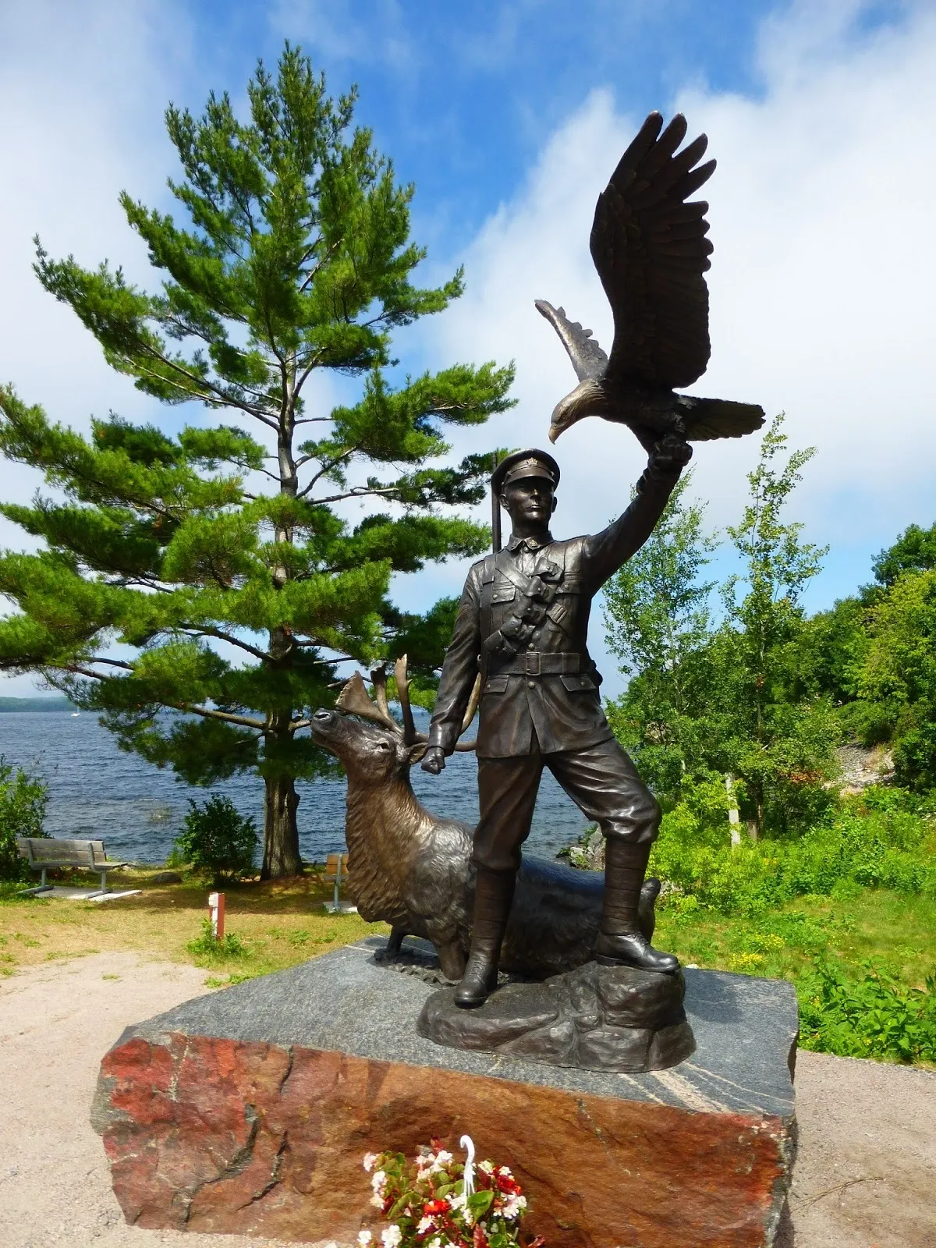
More than one indigenous soldier was medaled for heroic efforts on behalf of Canada. The monument stands testimony to the courage of sharpshooter Frances Pegahmagabow.

A bronze likeness of Company Sergeant-Major (CSM) Francis Pegahmagabow was unveiled June 21, 2016, on National Aboriginal Day in Parry Sound, Ontario, just a short drive from Sgt Pegahmagabow’s birthplace at Wasauksing First Nation. The event featured a strong military presence, including Lieutenant-General Marquis Hainse, Commander of the Canadian Army, and a 50-soldier guard of honour.

The monument was created by Tyler Fauvelle, a sculptor based in Sudbury, Ontario. The statue, which stands approximately 10 feet tall, depicts CSM Pegahmagabow in his wartime uniform with an eagle above and a caribou at his side.

The caribou represents his clan, hunting, and sustenance. The caribou pushes up through the water, a sign of Pegahmagabow’s battle through the depths of war, a symbol of the spirit of his people crossing the ocean with him and of their own struggle to emerge from the depths of injustice.

The rock at his feet resembles the far-away Canadian Shield.  Even on foreign soil that never knew his ancestors, he was grounded by his home, by the culture written in his heart.

The eagle is the sign of the Thunderbird – the powerful, mystical protector, the first messenger, the prayer carrier.  It calls to mind Pegahmagabow’s dangerous role as a scout and messenger and all the prayers rising up from the battlefield.  It must have seemed like the end of the world and migizi was needed.  The eagle’s acute vision represents Pegahmagabow’s – his sharp sniper’s eye, but also his figurative vision, as a man who saw the vital importance of preserving his people’s language and traditions and of advocating for Indigenous rights.  It echoes the eagle feathers in his Chief’s headdress, reminding us of his lineage and that he twice served as Chief of Wasauksing First Nation. The shock of war followed Francis Pegahmagabow home.  Thunder, artillery and the Thunderbirds would forever be linked in his mind and spirit.

Francis Pegahmagabow is shown in the Canadian Expeditionary Force uniform he would have worn, with the rifle that his own life and the lives of his fellow soldiers depended on.  His pose is noble, uplifted, alluding to his bravery and to his spiritual strength.

The small medicine pouch in his hand, Francis Pegahmagabow said he never knew what was in the pouch he was given. There is no doubt that it was part of the strong sense of spiritual protection that sustained him through some of the Great War’s most horrific battles.

The entire concept came to Tyler in a dream. Although it took months to sculpt, he had the honour of speaking often with members of Francis Pegahmagabow’s family and it never really changed much from his first dream.

CSM Pegahmagabow is revered for being the most decorated Indigenous Canadian to fight in the First World War. He is one of only 38 Canadians to have earned the Military Medal (MM) with two bars, each representing an act of valour. He earned the first in 1917 at the Battle of Passchendaele, the successful assault on a ridge in Belgium held by the Germans. He earned the second in 1918, during what would prove to be the final hundred days of the war, by charging into heavy enemy fire to retrieve ammunition for his comrades.

Following his wartime service, CSM Pegahmagabow returned home in 1919 and continued to lead by example as a member of the Non-Permanent Active Militia (now the Canadian Armed Forces Army Reserve) and through political activity in his community, where he served as chief and councillor before his death in 1952.

Please click here to learn more about the Canadian indigenous war heroes.

AMBER VALLEY: CANADA’S BLACK COMMUNITY

WRITTEN BY: Strathcona Place Society, Marms (SPS Member)

Original blog can be accessed at this site.

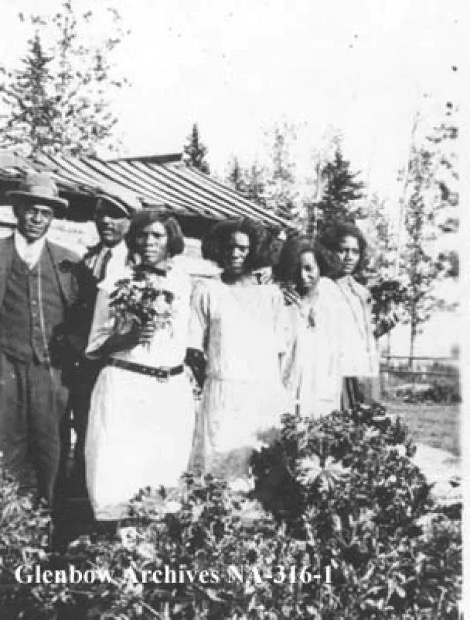
The community of Amber Valley, Alberta was founded in 1910 by African American families from Oklahoma, Texas, and other nearby states. Seeking a life away from segregationist Jim Crow laws, racial hostility, and violence in the US, they came in response to the Canadian government’s offer of free land in the western part of the country. Make no mistake, there was prejudice here too, but it was not as dangerous for Black people here. And so the new Black Canadians dug in, determined to make a new home for themselves and their children, in the swampy, difficult new land of hope in northern Alberta. Amber Valley today is something of a ghost town, but the children of Amber Valley have migrated all over the west, including to Edmonton, where many of these stalwart Canadians live today.

You can read more about Amber Valley here and watch the documentary, “Secret Alberta: The Former Life of Amber Valley” here

POST-COVID IMMIGRATION TO CANADA

WRITTEN BY: Strathcona Place Society, Talia Jean Perez

Original blog can be accessed at this link.

One area that Canadian leaders are seeing a change in as we slowly enter into our next chapter of post-COVID is the rise of Canadians’ disagreement with the number of immigrants being allowed into the country. As Canada moves forward, how can we really move forward holistically? Not just from point A to B but where do we want to end up? Extreme circumstances can cause us to be short-sided when it comes to our next steps, but as a nation, who do we want to be? If Canada was a person, who would they be? Now and several decades down the road. Katherine Feenan and Shamira Madhany of Ryerson University said, “Ensuring that those who choose to migrate, work or study in Canada are provided opportunities to integrate and engage in the workforce will be essential to the country’s economic success in the future.” 

Some informed videos are below on the subject:

  1. COVID-19 limited Canadian immigration and made it more difficult for newcomers – YouTube
  2. Canadian minister of immigration: Minister Marco Mendicino on Canada’s 2021 Immigration Targets – YouTube

Looking into the subject, as the daughter of an immigrant, I speak from experience when I say that Canada is richer for its diversity in cultures and peoples. For now and our future, may we continue to be open-handed and open-hearted Canadians. 

  1. COVID-19 has hardened Canadian views on immigration (theconversation.com)
  2. What is the impact of the COVID-19 pandemic on immigrants and their children? (oecd.org)

THE COVID-19 PANDEMIC EXPOSES THE NECESSITY OF FAST INTERNET SERVICE FOR RURAL STUDENTS

Episode 1 of Unicef Talks! In our first ever episode, Kritika Taparia interviews this month’s author, Anson Wong, about slow internet service in rural communities and the challenges rural students face. We explore the reasons why this is occurring, the phenomenon of the digital divide, and also what we as university students can do to combat this problem.

How Does Poor Internet Service Affect Rural Students?

With the rise of the COVID-19 pandemic, universities and schools across the country were forced to shut down, sending millions of Canadian students back home. While these have been difficult times for all students as they deal with the unique challenges and unpredictable nature of online schooling, Canadian rural students have been impacted particularly hard. 

For many urbanites, high speed internet is something we’ve taken for granted. From business growth, to allowing doctors to communicate with patients, to enabling people to work from home, and helping educators teach their students, the internet has been an essential tool in overcoming quarantine. In fact, the Canadian Radio-television and Telecommunications Commission (CRTC) affirmed that the internet is an essential service that should be available to all Canadians in 2016 (Carra). Yet for many rural communities, this is sadly not the case; the CRTC reports that less than 9% of rural Albertan communities have access to high internet speed  (50 Mbps download, 10 Mbps upload) (Scheel). This is because unlike urban communities which rely on fibre optic cable, rural communities largely depend on fixed wireless internet, which is slower, less reliable, and more expensive. 

As a result of this digital divide, a phenomenon termed the “homework gap” has emerged, wherein rural students are unable to finish their homework and cannot use online resources (BLiNQ Network). This has led some students to take extreme measures for their education, such as sitting in parking lots near fast food joints for the Wi-Fi hotspots, or visiting city-dwelling friends where the internet is more reliable (Fregni). For teachers, the lack of broadband wireline services means that video lessons through Zoom or GoogleMeets are inaccessible and they are unable to stream instructional videos for their students. Instead, many teachers are left scrambling to find alternatives (Urquhart). Routinely, this homework gap leads to an achievement gap whereby rural students fall behind academically and do not develop the necessary skills for future professions or higher education (BLiNQ Network)

It is also important to recognize that while COVID-19 has exacerbated these problems, these issues have existed for decades. Rural students have long experienced less technological training, limited access to information, and more difficulties in applying to universities through using online portals. Therefore, it is imperative that these issues be addressed even after the resolution of the pandemic. 

Steps Moving Forward

There exists both a social and economic reason for the current state of rural internet, and therefore, two steps need to be taken. First, communities need to acknowledge the importance of the internet. Unlike traditional infrastructure projects like buildings, roads, electric systems, or sewage, internet infrastructure is both more abstract and modern. Consequently, many people (especially rural communities themselves) fail to recognize its utility and often do not prioritize its implementation. With the novel challenges brought about by COVID-19, the public is slowly understanding how slow internet impedes student learning, but community awareness continues to be a major obstacle. Aside from education, better internet will also play a major role in propelling telehealth, business, and tourism. We need to educate communities about the cruciality of the internet and its role as a basic necessity for operating in the 21st century; failing to do so will result in whole communities falling behind. 

The second step that needs to be taken is to advocate for government support. The major economic obstacle arises from the fact  that it is ultimately not financially profitable for internet service providers (ISPs) to create the network infrastructure for rural communities with such low population densities. As such, in order to get broadband access to rural communities, provincial and federal support is a necessity. All Canadian students, regardless of inhabitance,  should be given access to high quality broadband. Advocating for this issue and pressuring government officials are vital strategies in ensuring that these underserved communities get the services they need. 

In 2020, the Canadian federal government introduced the Universal Broadband Fund which proposed to provide high speed internet (50/10 Mbps) to 98% of Canadians by 2026 as a means of assisting rural Canadians (Scheel). While this definitely a step in the right direction, more needs to be done. First, we need to ensure that the federal government honours their promise and that they consistently meet their targets. As of March 2021, the government has been slow to provide funding, and private companies and ISPs have not actively offered support (Scheel). With the numerous problems caused by the COVID-19 pandemic, it would not be unreasonable to think that the government may abandon this project in the future. Ensuring that the government remains accountable will be the public’s responsibility. The more we voice our concerns, the more likely we are to see real change. Second, we need to also look past 2026. Internet and technology advance rapidly in modern times and what is considered acceptable internet today may not be sufficient by 2026. As the internet evolves and advances, we too will need to adapt our advocacy strategies and ensure that our rural communities also have access to these new services. 

In Canada, where our internet prices are one of the highest in the world, it is unacceptable that some of our communities are still being served substandard internet. As society progresses, the internet will continue to become increasingly important and rural students will continue to suffer. If we ever hope to integrate rural communities and students with the rest of Canada, the government, ISPs, and the public need to work together to bridge this digital divide. 

Bibliography

BLiNQ Network. “Why Is Rural Broadband Essential?” Bridging the Rural-Urban Digital Divide, 16 Apr. 2020, https://blinqnetworks.com/why-is-rural-broadband-essential/.

Carra, Barb. “Opinion | Lack of High-Speed Internet Is Harming Rural Areas during Pandemic.” Thestar.Com, 26 Apr. 2020, https://www.thestar.com/opinion/contributors/2020/04/26/lack-of-high-speed-internet-is-harming-rural-areas-during-pandemic.html.

Fregni. How Rural Students Are Left Behind in the Digital Age | Teach For America. https://www.teachforamerica.org/stories/how-rural-students-are-left-behind-in-the-digital-age. Accessed 23 May 2021.

Scheel, Elise von. “Alberta Broadband Strategy Unclear despite Push from Province, Feds for Connectivity | CBC News.” CBC, 30 Mar. 2021, https://www.cbc.ca/news/canada/calgary/alberta-ottawa-internet-broadband-budget-strategy-1.5968809.

Urquhart, Mia. “Online Teaching Resources out of Reach for Many Rural Families | CBC News.” CBC, 12 Apr. 2020, https://www.cbc.ca/news/canada/new-brunswick/rural-internet-education-home-1.5526704.

Written by: Anson Wong

Edited by: Kritika Taparia and Sara Assaf

CANADIAN FEDERAL ELECTION 2021: WHAT YOUTH NEED TO KNOW

Hello UNICEF Readers! We are so excited you’ve clicked on this blog, as today we’ll be addressing everything you need to know for the upcoming Federal Canadian Snap Election! With constant campaigns, social media updates, and news articles, it can be hard to make sense of what’s happening and how to get involved. We’re here to help! Today, we break down Canada’s electoral system, the purpose of this election, a brief summary of the parties running, and some extra tips. We feel it’s important for youth voters to be informed, and we hope this blog helps you better understand how this upcoming election will work! 

Why do we have another election? Didn’t we have one in 2019?

Canada did have a previous federal election in 2019, and the next fixed-date election was planned for September 2023 (Tunney, 2021). However, on August 15th, Prime Minister Justin Trudeau’s request for the dissolution of Parliament was approved by Governor General Mary Simons, and a Canadian federal election was officially called. Importantly, the reason for Trudeau’s request was due to current poll results. As of August 15th, Trudeau’s Liberals have an important lead in public support — 36%, as compared to Erin O’Toole’s Conservative Party, which stands at 29%. The Liberal Party’s lead puts them in a range of seats that can allow them to form a majority government, which they were unable to secure in the 2019 election. This election also allows voters to voice their opinions regarding the federal government’s handling of the COVID-19 pandemic, and gives us the opportunity to decide on the party that will lead us out of it (D’Andrea, 2021).

Canada’s Electoral System: First Past the Post

Understanding the way Canada’s electoral system works is essential, and may even influence the way you choose to vote. So, here’s a quick review of how it runs. Canada is divided into 338 electoral ridings, each of which has one seat in Parliament (McPhail, 2018). Each seat is filled by a Member of Parliament (MP) who is elected by eligible voters in their riding. Importantly, a MP does not need to win 50% of the vote in their riding, but rather, only the plurality, or more than any other candidate. Once elected, each MP has equal say in legislation. The First Past the Post (FPTP) system allows for regional interests to be represented by the parliament, as voters in metropolitan areas may have vastly different priorities than those in rural regions. However, this system has significant shortcomings, as well. For one, ridings do not have an identical number of constituents. Thus, in a riding with a relatively small population, each voter has a much larger influence on the election result as compared to a densely populated riding. Another issue is that a political party requires a high concentration of voters in one riding to vote for their candidate in order to get a seat. For smaller parties, such as the Green Party, this can be detrimental. For example, in 2011, while the Green Party had 3.8% of the country’s popular vote, they were able to secure only one seat (out of 338) in Parliament. Smaller parties have an automatic disadvantage, which eventually leads to individuals not wanting to “waste” their vote. Thus, instead of voting for the party that they align with the best, they will vote for the party that they can tolerate, but has the higher chance of winning against the party that they dislike the most. 

Voting Logistics — Registration & Ridings

For many of us first-time voters, the voting process may seem obscure at first glance. However, the good news is that the details about voting federally is really a one-stop-shop. The Elections Canada website will provide you details regarding your riding, your voting location, the electoral candidates in your constituency, your registration status, and other voting day logistics — and all you’ll need is your postal code!

Party Leaders & Platforms 

Each major party’s platforms (Liberal, Conservative, New Democrat, Bloc Québécois, Green, and People’s Party) are available on a plethora of news sources, including CBC, CTV News, and Maclean’s. This entails a detailed summary of all federal responsibilities and the parties’ priorities — including issues that most youth voters are especially concerned with, such as reconciliation, climate change, green energy, racial inequality, and more. We highly encourage you to give the party platforms a read; focus on the issues that matter most to you and be aware of which parties are advocating for what you believe in.

What You Should Look Out For

  1. News stories! This is a crucial time to stay updated and aware of what’s going on in Canada, especially regarding election updates. There are a plethora of credible news sources available online, including but not limited to CBC, CTV News, Maclean’s, and The Globe and Mail. It’s important to recognize that every news source carries bias. For example, CBC and Maclean’s tend to have a left-center bias, whereas The Globe and Mail has a slight right-center bias (Media Bias/Fact Check). The best way to remain consistent in your news is to read from a variety of sources. 
  2. Election debates. The French language debate will air on September 8, from 6-8 PM MDT, and the English debate on September 9, from 7-9 PM MDT (Ghosh, 2021). The topics for each debate have already been announced. The English debate will focus on 1) affordability, 2) climate change, 3) COVID-19 recovery, 4) leadership and accountability, and 5) reconciliation, whereas the French debate will be centered on 1) climate, cost of living, and public finances, 2) Indigenous peoples, 3) cultural industries and identities, 4) justice and foreign policy, and 5) pandemic and healthcare (CTV News, 2021). The debates will be made available on all major Canadian TV, radio, and online platforms.
  3. Poll and results trackers. If you’d like an idea of where Canadians stand throughout the next couple of weeks before the election, take a look at CBC’s Poll Tracker. On election day, September 20th, 2021, all major news sources will be tracking and providing the results from each province immediately as they are counted.

That’s all for our FAQs! We hope this blog gives you a better understanding of the voting procedure, and how you can get involved this September. But the learning doesn’t stop there—we at Campus UNICEF are encouraging all readers to keep researching, and to use their voices to really make their votes count! Through education on politics, we can all exercise our rights and be empowered as Canadian citizens. Whoever you vote for—make it count! 

Thanks for reading and we’ll see you in the next one! 

Works Cited

CTVNews.ca. “How to Watch the Upcoming Federal Leaders’ Debates.” CTVNews, CTV News, 7 Sept. 2021, http://www.ctvnews.ca/politics/federal-election-2021/how-to-watch-the-upcoming-federal-leaders-debates-1.5567068.

D’Andrea, Aaron. “Looming Federal Election All about Securing a Majority Government: Experts – National.” Global News, 13 Aug. 2021, 3:01 PM, globalnews.ca/news/8110460/federal-election-majority-government-trudeau-canada/.

Ghosh, Twinkle. “Canada Election 2021: How to Watch the Federal Leaders’ Debate on Global News – National.” Global News, Global News, 2 Sept. 2021, globalnews.ca/news/8158397/canada-election-2021-leaders-debate-watch-global-news/.

McPhail, Brenda. “Voting in Canada: The First Past the Post System.” CCLA, 25 Jan. 2018, ccla.org/voting-canada-first-past-post-system/.

    “Media Bias/Fact Check.” Media Bias/Fact Check, 2017, mediabiasfactcheck.com/.

Tunney, Catharine, and Christian Paas-Lang. “Canada Is Headed for a Federal Election on Sept. 20 | CBC News.” CBCnews, CBC/Radio Canada, 16 Aug. 2021, http://www.cbc.ca/news/politics/federal-election-call-1.6141189.

Written by Kritika Taparia and Sara Assaf

Edited by Anson Wong

FROM THE ASHES — BOOK REVIEW

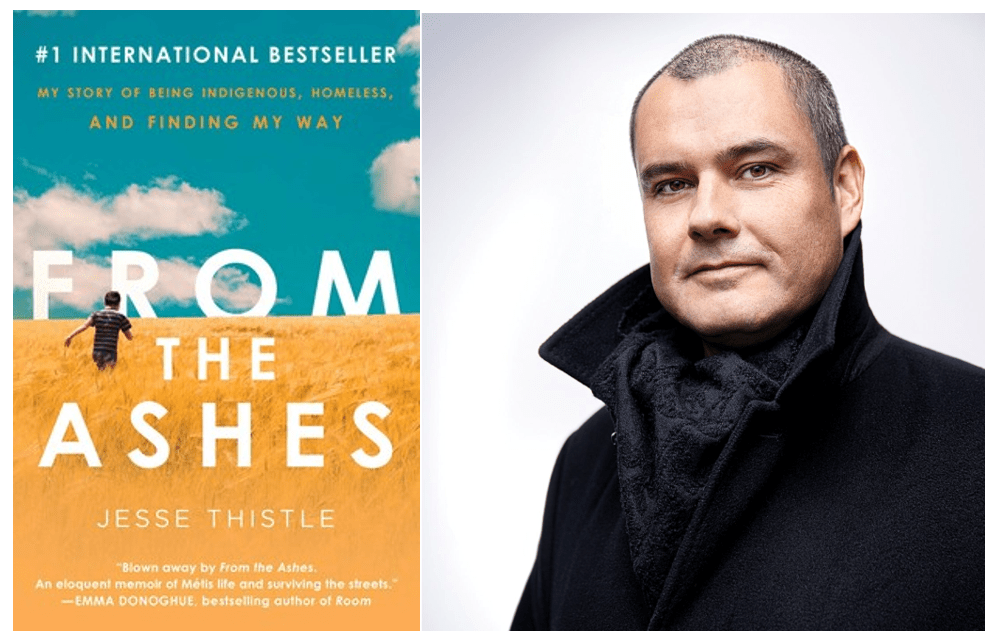
From the Ashes is an inspiring memoir by Jesse Thistle of overcoming homelessness and addiction, while reclaiming his Métis-Cree identity. At a young age, Jesse’s parents split, and his siblings and he were placed in foster care, because of their father’s struggles with addiction and crime. After a traumatic foster care experience, the three children were taken in by their paternal grandparents. Their grandparents were loving but strict, frequently giving them reminders not to follow in their father’s path of drug addiction. Dealing with the trauma of his parent’s separation and abandonment, Jesse unfortunately gave in to the debilitating influence of drugs. He was kicked out of his grandparent’s home after breaking their rules around drug use, became homeless, and started to depend on committing small crimes to survive. After enduring a few prison terms and a terrible injury to his right foot caused by falling 35 feet while drunk, Jesse was resolute to start a new life. Following a year of treatment in Harvest House, an addiction treatment center, Jesse was able to overcome addiction with a newfound love for education. This love was kindled by his now-wife, Lucie, who helped motivate him to pursue his interests in history through post-secondary schooling. After overcoming homelessness and addiction, Jesse was also able to reconnect with his family, friends, and Métis-Cree heritage. The heritage that Jesse once felt was not integral to his identity had now become a symbol of his pride, and inspiration to build a better life for himself.

Review 1:

A scene that stood out to me in Thistle’s memoir was when he received his certificate from the University of Ottawa. 

It lit me up to see my name, “Jesse Thistle”, alongside “University of Ottawa.” I’d done something significant. I’d actually achieved something in my life. I didn’t have a driver’s license, ID, proper high school education, a health card, nothing – but here was this completion certificate that had “university” with my name under it! (Thistle 305)

This scene shows the amount of excitement Thistle felt when he completed his certificate, with a university’s name next to his own. Seeing the name of a university inspired him to pursue further studies.

Homelessness and poverty limit one’s abilities to achieve their educational goals. Education can be an afterthought for people facing these conditions, as their primary goal is survival. Without financial and emotional support, educational goals may seem out of reach. In Thistle’s case, he had to go through correctional facilities to be granted food, medical treatment, and schooling opportunities.  When others enrolled at Harvest House alongside Thistle received their certificates, they often made remarks such as,

“You think people will hire you? … You’re no better than the rest of us” (Thistle 305).

These remarks reflect how people in positions similar to Thistle’s may feel trapped by the labels that society puts on them. His act of studying was outlandish enough for others to laugh at him for even thinking of having such academic aspirations. Yet, such a response is understandable, as homelessness, addiction, crime, and abandonment by loved ones can cause a lack of self-confidence and a feeling of disconnect from society. Thistle had to relearn even seemingly minimal activities such as shaving, showering, and filling out forms because he had been prohibited from doing so for many years. Living on the streets or in his friend Leeroy’s car, these mundane everyday moments were luxuries to Thistle. Despite Thistle’s experiences with these hardships, this scene was a moment that gave him the hope and confidence he needed, to work toward his dreams. 

At Harvest House, Thistle was also able to complete his General Education Development (GED) certification. His studies, and now career at York University were all made possible through the resources provided to him, allowing him to receive GED.  

As of 2015, approximately 75% of offenders that were federally sentenced were shown to have incomplete high school education (Government of Canada, Education Programs). The Federal government currently has education programs in place that assess the needs of offenders, and place them in the corresponding Adult Basic Education (ABE) programming (Government of Canada, Offender Education Programs and Services). There is a societal need for these programs to continue, and funding needed for the programs themselves. They hold the opportunity to change people’s lives for the better. If not in the correctional facility itself, there should be external options for offenders, such as Harvest House, which gave Thistle a unique opportunity to finish his education. Offenders that serve their sentences and face poverty or homelessness afterwards may not be able to finish their high school/post-secondary education. By giving this type of opportunity to offenders while serving their sentence, they would get the chance to live a better life once they leave the correctional facility. Perhaps what we need is to look beyond the label of homelessness, and see the person within to address underlying issues and causes of homelessness. Thistle’s memoir provides valuable insight into the importance of one’s education as a catalyst for a more stable future.  

Citations

Government of Canada, Correctional Service of Canada. “Education Programs.” Government of Canada, Correctional Service of Canada, Communications, 30 Sept. 2019, www.csc-scc.gc.ca/002/002-0005-en.shtml

Government of Canada, Correctional Service of Canada. “Offender Education Programs and Services.” Government of Canada, Correctional Service of Canada, Communications and Citizen Engagement Sector, 1 Sept. 2016, www.csc-scc.gc.ca/005/007/005007-2014-eng.shtml

Thistle, Jesse. From the Ashes. Simon & Schuster, 2019. 


Review 2:

In a memoir as raw and impactful as From the Ashes, it’s been beyond difficult to pinpoint one scene to discuss. However, one that resonates with me the most is in a chapter named “Indian Turned Métis”, in which Jesse Thistle reconnects with his Métis heritage after a lifetime of pushing it away. Beginning as part of an Indigenous History university course, a family history project became a new way for Thistle to learn about his mother’s side of the family, and in the process, reunite with a long-lost aspect of his own identity:

“I remembered them. 

I remembered my mother’s people. 

I remembered who I was.” (Thistle, 330)

This chapter’s significance contextualizes when we look at the obstacles Thistle faced to come to terms with his identity. Separated from his mother at only three (and his father, not soon after), Jesse not only found himself lacking parental guidance, but felt completely disconnected from his Métis-Cree heritage. Once  he entered school and was asked about his parents and heritage, his burning curiosity for his culture slowly turned into resentment towards his parents and, by extension, his cultural identity. Instead, he decided that it would  “make his life easier… to tell people [he] was Italian.” (Thistle, 78) 

The perception of Indigenous peoples in Thistle’s community also played a significant role in  him pushing away his culture. After a fight at school, his classmate retaliated with “You’re just a dirty Indian” and that he would “probably die drinking like they all do” (Thistle, 87). 

These labels are a product of centuries of discrimination against Indigenous populations, which have devastatingly impacted Thistle and many generations of First Nations, Métis, and Inuit (FNMI) individuals. Institutions and legislation involving the Indian Act  actively worked to erase Indigenous cultures, languages, and practices. Events such as the Sixties (and the more recent Millennium) Scoop have forcibly removed FNMI children from their families to be put into the foster care system. These experiences have caused intergenerational trauma that have been linked to increased substance abuse and child neglect. (Ross et al., 25) Furthermore, during a talk at Carleton University, Thistle himself spoke on his experiences working in the homeless sector:

“…There were generations of Indigenous Peoples who lost portions of themselves through the breakup of their families, destruction of their homes, residential schools, Children’s Aid Society and the ‘60s scoop, only to end up drifting around homeless like I did.” (Thistle, 2021)

Yet despite these obstacles, Thistle finds his way back to his roots, discovering solace in finally reconnecting with his mother’s family and heritage. Moreover, he began to pursue a career and passion that motivates him to learn about his own history and help those who continue to face the impacts of colonialism. This then brings about the question — how can Indigenous culture itself be applied to better help FNMI individuals struggling with addiction and homelessness? Culturally-aware supports in homeless shelters, as well as cultural interventions in addiction treatments have been suggested as potential solutions. (Rowan et al., 25) We must continue to invest our resources towards appreciating and amplifying the vibrant cultures of Indigenous peoples that have been ignored for too long.

Overall, From The Ashes is a thought provoking and beautifully-written memoir that will resonate and inspire long after the last page is read. 

Citations

Mackay, Brenna. “Author Jesse Thistle Shares Story of Trauma, Healing and Finding Home.” Carleton Newsroom, 29 Jan. 2021, newsroom.carleton.ca/story/jesse-thistle-trauma-healing-finding-home/.

Ross, Amélie, et al. “Impact of Residential Schooling and of Child Abuse on Substance Use Problem in Indigenous Peoples.” Addictive Behaviors, vol. 51, 2015, p. 25., doi:10.1016/j.addbeh.2015.07.014.

Rowan, Margo, et al. “Cultural Interventions to Treat Addictions in Indigenous Populations: Findings from a Scoping Study.” Substance Abuse Treatment, Prevention, and Policy, vol. 9, no. 1, 2014, p. 25., doi:10.1186/1747-597x-9-34.

Thistle, Jesse. From the Ashes. Simon & Schuster, 2019. 

Written by Sukhnoor Khehra (Review 1) and Kritika Taparia (Review 2)

Edited by Sara Assaf, Rose He, and Anson Wong