Minority groups have been and continue to be exploited and discriminated against in the field of medicine. Notable international examples in medical research include the Tuskegee Study, where researchers in Alabama infected African-American men and did not provide them treatment, and the experimentation conducted in Nazi Germany’s death camps, where Jewish prisoners were tortured and killed in the name of scientific progress (Mcvean, 2020; United States Holocaust Memorial Museum, n.d.). There are also countless examples of racial, religious, and gender minorities receiving unequal treatment in comparison to their counterparts in the majority; with studies finding that Black Americans were less likely to receive treatment for cancer or for pain in comparison to their white counterparts (Eastman, 2002; Meghani et al. 2012). Furthermore, a significant portion of American medical students and residents believed in false biological differences between white and Black Americans, such as that the latter have a higher pain tolerance. However, it would be disingenuous to criticize other countries when a significant minority in Canada endure similar historical and modern treatment from medical researchers and professionals.
Residential School Nutrition Experiments
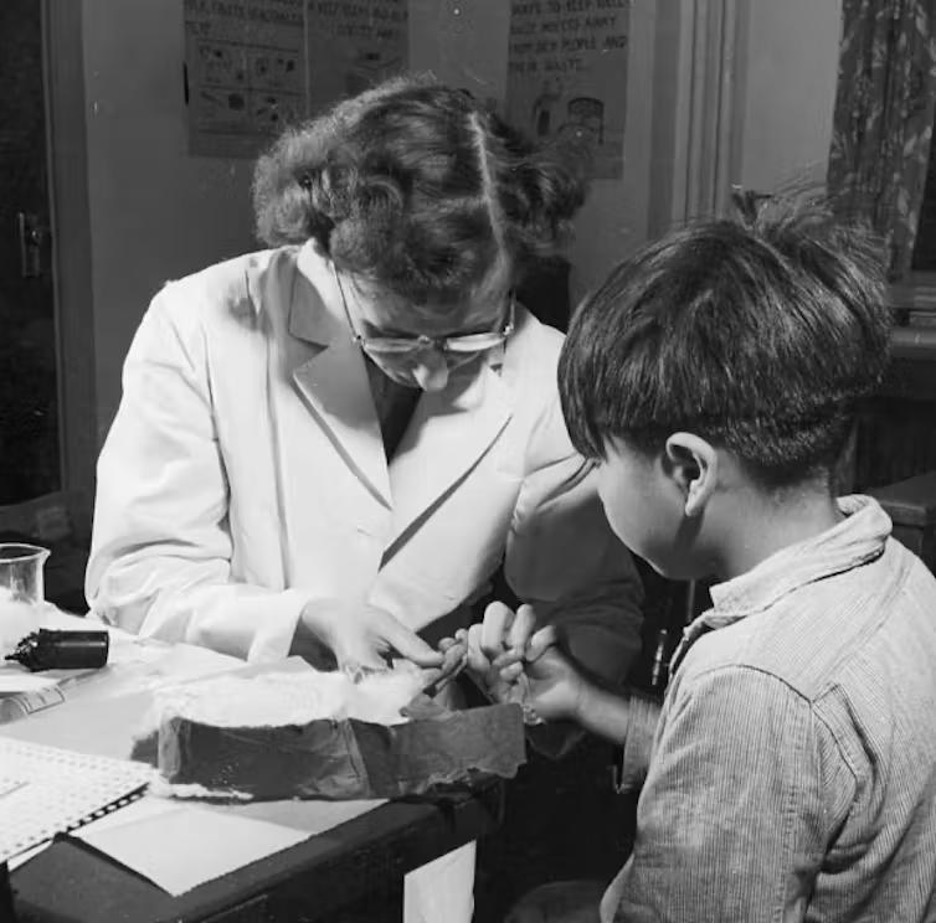
One of the most infamous examples of unethical Canadian medical research are the nutrition experiments conducted in Canada’s residential schools, which stemmed from a 1942 survey of Cree communities in Northern Manitoba carried out by federal researchers (Mosby, 2013). While it’s easy to briefly look at this survey and conclude that it was conducted without malicious intent, it is important to remember that the researchers released a report prior to conducting the survey suggesting that the results may lead to solutions for the ‘Indian Problem’, or the belief that the Indigenous population has to be assimilated (Brant, n.d.; Mosby, 2013). After federal researchers discovered that malnutrition was prevalent in Indigenous communities and residential schools, the federal government gave permission for doctors to test out their theories on the communities and schools. Overseen by Dr Percy Moore, the Indian Affairs Branch Superintendent of Medical Services, and Dr Frederick Tisdall, a famed nutritionist, these experiments often utilized control of malnourished children who were denied adequate nutrition (MacDonald et al., 2014). The treatment group did not often fare better, with researchers simply giving supplements to a portion of the total sample. In some of these studies, improvements were seen, in others, malnutrition persisted. Efforts were also made to control as many factors as possible, even at the expense of the research subjects. For example, previously available dental care was denied in some settings because the researchers wanted to observe the state of dental decay and gingivitis caused by malnutrition.
However, the experiment with arguably the longest mark on Canadian history is the 1947 study conducted by Dr. Lionell Pett (Tennant, 2021). Using a sample consisting of over 1000 children across six residential schools, Dr. Pett tested a variety of interventions and non-interventions for malnutrition. Again, some children were kept malnutritioned for the sake of control. It is important to note that some of these interventions led to the development of other conditions; after feeding a treatment group fortified flour, many individuals developed anemia, or lower red blood cell count than the norm. It is important to note that in 1941, Dr. Pett was the primary author of the precursor to the Canadian Food Guide, and it is believed that his experiments were based on internal debates among nutrition professionals and bureaucrats about Canada’s Food Guide. It is not a stretch to suggest that the modern Canadian Food Guide is built off of the results of at least one of Pett’s experiments.
Alongside the belief that they could solve the ‘Indian Problem’, there was also somewhat of a white savior complex/white man’s burden, as suggested by a 1948 press release promoting the nutritional study released by Indian Affairs, which stated:
“They have abandoned the native eating habits of their forefathers and adopted a semi-civilized, semi native diet which lacks essential food values, brings them to malnutrition and leaves them prey to tuberculosis and other disease. The white man, who unintentionally is responsible for the Indians’ changed eating habits, now is trying to salvage the red man by directing him towards proper food channels … (Library and Archives, 1948)”
Improper Treatment
Medical research is not the only area of medicine where Indigeonous people have been abused. In 2018, John Pambrun and a multitude of other Indigneous people filed a class-action lawsuit alleging various instances of improper medical treatment and experimentation at the hands of Canadian healthcare professionals in hospitals and schools (CBC/Radio Canada, 2018; Kassam, 2018). In 1955, Pambrum had a lung removed as part of treatment for tuberculosis, despite antibiotics for the disease being the usual treatment at the time. Others claim of physical and sexual assault, such as being force-fed their own vomit and unconsesnually restrained, and experimentation. Instances of improper treatment for Indigenous people are not just found in the 20th Century. In 2008, 45-year-old Brian Sinclair was ignored for at least 34 hours, before passing away due to complications of a treatable bladder infection.

Modern Day
What was touched upon in this article is simply the tip of the iceberg of decades of mistreatment at the hands of the Canadian medical field. To this day, many Indigenous Canadians do not trust the Canadian medical system (West, 2014). While many actions have been taken to repair this relationship, such as some Indigenous communities forming their own healthcare centres and have become more involved in medical research, ultimately the question remain; how can the Canadian medical system be improved to promote trust in Indigenous communities, or altered to allow them to participate in it?
Written by: Ashwath Puchakatla
References:
Brant, J. (n.d.). Racial segregation of Indigenous Peoples in Canada. The Canadian Encyclopedia. Retrieved September 04, 2022, from https://www.thecanadianencyclopedia.ca/en/article/racial-segregation-of-indigenous-peoples-in-canada
CBC/Radio Canada. (2018, May 10). Class action suit says Canada used indigenous people as Medical ‘guinea pigs’ | CBC news. CBCnews. Retrieved September 12, 2022, from https://www.cbc.ca/news/canada/saskatoon/medical-experiments-residential-schools-students-canada-1.4655864
Eastman, P. (2002). IOM report: Minorities Receive Unequal Medical Treatment Even When Access is Similar. Oncology Times, 24(5), 31–32. https://doi.org/10.1097/01.cot.0000285929.98853.6b
Kassam , A. (2018, May 11). Canada sued over years of alleged experimentation on indigenous people. The Guardian. Retrieved September 13, 2022, from https://www.theguardian.com/world/2018/may/11/canada-indigenous-people-medical-experiments-lawsuit
Library and Archives Canada (January 14, 1948). Indians in North Forsake Health-Giving Native Diet. 2986(851-6-1).
MacDonald, N. E., Stanwick, R., & Lynk, A. (2014). Canada’s shameful history of nutrition research on residential school children: The need for strong medical ethics in Aboriginal Health Research. Paediatrics & Child Health, 19(2), 64–64. https://doi.org/10.1093/pch/19.2.64
Mcvean, A. (2020, December 30). 40 years of human experimentation in America: The tuskegee study. Office for Science and Society. Retrieved September 04, 2022, from https://www.mcgill.ca/oss/article/history/40-years-human-experimentation-america-tuskegee-study
Meghani, S. H., Byun, E., & Gallagher, R. M. (2012). Time to take stock: A meta-analysis and systematic review of analgesic treatment disparities for pain in the United States. Pain Medicine, 13(2), 150–174. https://doi.org/10.1111/j.1526-4637.2011.01310.x
Mosby, I. (2013). Administering colonial science: Nutrition research and human biomedical experimentation in Aboriginal communities and residential schools, 1942–1952. Histoire Sociale/Social History, 46(91), 145–172. https://doi.org/10.1353/his.2013.0015
Tennant, Z. (2021, July 5). The dark history of Canada’s Food Guide: How Experiments on Indigenous Children Shaped Nutrition Policy | CBC Radio. CBCnews. Retrieved September 09, 2022, from https://www.cbc.ca/radio/unreserved/how-food-in-canada-is-tied-to-land-language-community-and-colonization-1.5989764/the-dark-history-of-canada-s-food-guide-how-experiments-on-indigenous-children-shaped-nutrition-policy-1.5989785
United States Holocaust Memorial Museum. (n.d.). Medical Experiments. United States holocaust memorial museum. Retrieved September 05, 2022, from https://www.ushmm.org/collections/bibliography/medical-experiments
West, J. (2014, November 26). First Nations mistrust health system, Dalhousie researchers say | CBC news. CBCnews. Retrieved September 11, 2022, from https://www.cbc.ca/news/canada/nova-scotia/first-nations-mistrust-health-system-dalhousie-researchers-say-1.2851414
 Campus UNICEF