Partners:
Ashare: to learn how to better pay back your student loans, visit https://www.ashare.io/
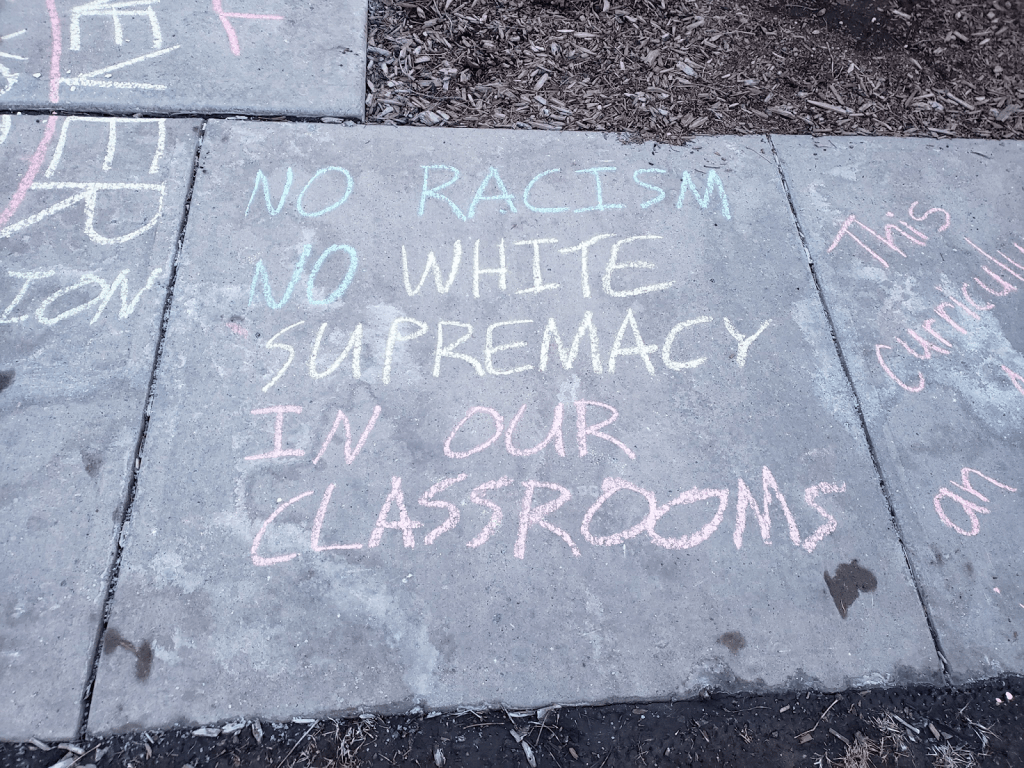
The Alberta UCP’s K-6 curriculum draft produced a lot of controversy with the public and with Alberta’s teachers. Teachers and parents expressed feelings of frustration, anger and disappointment because they felt that the curriculum was racist and effectively omitting important lessons in history. The Edmonton school board asked education minister Adriana LaGrange to rewrite the K-6 curriculum and halt the pilot program. As a response, the Alberta’s Teachers Association established a professional curriculum titled the “Analysis and Critique of Alberta Education’s 2021 Draft K-6 Curriculum”. Furthermore, they developed and analyzed fourteen key findings and my paper will focus on two out of the fourteen.
Unfortunately, the perspectives, contributions and histories of Indigenous peoples are often forgotten in Alberta’s education system. As a commitment to truth and reconciliation, the Alberta government promised to include “mandatory content for all Alberta students on the topics of residential schools and treaties (The Alberta Teachers’ Association, 2021, p 30)” and “a kindergarten to Grade 12 curriculum development standard.” Additionally, to accurately reflect the Indigenous perspectives, the curriculum process involved five Indigenous representatives as advisors from August 20 to November 2020. However, signed NDAs prohibit the representatives from commenting on the process and their experiences. Moreover, their contribution does not reflect an endorsement of the UCP draft curriculum. This leads to my first analysis of one of the key findings: “The inclusion of Indigenous content that is not authentic and appears as tokenism.” The consultation of five Indigenous representatives was a weak attempt at reflecting Indigenous history accurately. Simply said, Indigenous history and stories should be written by Indigenous peoples. It is not the role of the UCP government to determine how Indigenous culture, history, and stories should be told because it does not belong to them. Additionally, the draft curriculum “does not always encourage a positive perspective toward these cultures (The Alberta Teachers’ Association, 2021, p 30).” Indigenous peoples are reflected through an ethnocentric lens that presents their identities as savage and British colonialism as a natural consequence of needing to civilize them. In this way, the curriculum promotes very western Eurocentric ideals. In the grade 6 daft curriculum, the Indigenous perspective is effectively precluded from the events of the War of 1812 and the Battle of the Plains of Abraham. Certainly, this absence is a bias. When the UCP government is criticized for this white washing of history, they consistently refer to the five Indigenous representatives they consulted. However, respectful Indigenous participation should have required the consultation and participation of Indigenous communities and Elders. The Alberta Teachers’ Association explains that the community should decide who speaks for them and how the information is reflected. Successful participation would conclude with Indigenous communities championing the draft curriculum and public enthusiastic endorsement.
Similar to the first key finding I analyzed, the second key finding critique of the Alberta draft curriculum is the “lack of respect for Alberta’s diversity and support for a peaceful, pluralistic society.” In The Guiding Framework for the Design and Development of Kindergarten to Grade 12 Provincial Curriculum (2020), the government outlines that the curriculum should recognize the different cultures, ethnicities, and many linguistic groups in Canada. As a pluralistic society, Canada recognizes the importance of respecting and understanding the different experiences, backgrounds, and faiths of different groups. However, in the Alberta Teachers’ Association online survey, teachers do not think that the draft curriculum represents a variety of beliefs in our plural society nor does the draft curriculum respect Alberta/Canada’s diversity. One of the teachers commented that “the social studies content is horrendous. Many outcomes are Eurocentric and seem to promote xenophobia and racism (The Alberta Teachers’ Association, 2021, p 43).” Furthermore, the curriculum has a clear Christian perspective by using Christian references and overtones throughout. This fails to show equal respect for all religions and is not appreciative of Alberta’s diversity. Although the Alberta guidelines asserts that the curriculum promotes an inclusive education system, the draft curriculum fails to mention the perspectives of non-Christian experiences and other diverse groups’ contributions to the development of Canada. The Alberta Teachers’ Association Report also mentions the constant use of the term’s truth, high arts, high literature, and beauty and goodness, but the curriculum fails to establish whose perspective we’re viewing these terms from. These terms are thus promoting a singular view of the world, which is again, a white Christian lens. Essentially, the Guiding Framework and the draft curriculum contradict. One advocates for pluralism and respect for diversity whilst the other mentions people of different faiths, experience, and backgrounds but with a Christian bias and Eurocentric perspective. Lastly, the acknowledgment of racism experienced by different groups in Canada does not acknowledge the continued existence of racism and discrimination today. “It claims that many people overcame racism, but that does not mean that racism has disappeared (The Alberta Teachers’ Association, 2021, p 45).” This failure to recognize the consequences of racism allows it to persist. The draft curriculum does not show students how to critically examine racism or how to develop ways to end systemic racism in Alberta. Not confronting racism is anti-pluralism.
The exclusion of certain lessons in history and the emphasis placed on the Christian perspective can be explained using author J.M Blauts’ (1993) “Colonizer’s Model of the World ” theory. The theory asserts that education is taught through a straight narrow tunnel. The fundamental feature of the Colonizer’s Model of the World is the diffusionist assumption about historical change. History is written and taught by Europeans today in a tunnel of time – the Eurocentric “tunnel of history” – which explains what happened, where, when and why. Everything outside this tunnel can then be effectively forgotten, erased and rendered absent. So, the lack of Indigenous perspectives and the lack of acknowledgment of the continued existence of racism in the draft curriculum is a result of the Alberta government attempting to teach history through their narrow western lens. Since the racist parts of history are not being taught, or are being filtered to be more digestible, subalternized peoples’ (non-white peoples) identities remain silent by the Colonizer’s Model of the World because their perspectives are not being shared or taught. As I mentioned earlier in my paper, the events of the War of 1812 in the draft curriculum were missing the Indigenous perspectives. This is an example of Blauts’ theory. In this example, Indigenous peoples’ voices in historical major events are being erased because their perspectives are outside the Eurocentric “tunnel of history.”
Conclusion
The Alberta K-6 curriculum draft is definitely incomplete. The curriculum lacks important lessons and perspectives and is a tool for sustaining racism and discrimination in Alberta. The quality of Alberta’s elementary education evaporated with this new draft. Certainly, there are other critiques of the draft curriculum which includes its disorganization and inappropriate content for children. My short paper quickly explains how education and academia in general are taught through a western lens and although Canada champions pluralism and respect for multiculturalism, it renders minority groups silent when they omit their perspectives and experiences in history.
References
The Alberta Teachers’ Association. (2021, September 29th). Professional Curriculum Analysis and Critique of Alberta Education’s 2021 Draft K-6 Curriculum, from
https://www.teachers.ab.ca/SiteCollectionDocuments/ATA/Publications/Research/COOR 184%20Curriculum%20Response%20Report.pdf
Alberta Education, Government of Alberta. (2020, December). The guiding framework for the Design and Development of Kindergarten to Grade 12 Provincial Curriculum, from https://open.alberta.ca/dataset/f3fb3059-fdec-4c62-89b7-a34eb9d33c3c/resource/0a51ffa3- 76bf-4f8b-a31c-7481eb2fba5c/download/edc-guiding-framework-curriculum-development 2020.pdf
Alberta Education, Government of Alberta. (2021, August). Draft Studies Kindergarten to Grade 6 Curriculum, from https://cdn.learnalberta.ca/Resources/content/cda/draftPDF/media/SocialStudies/Social%20St udies-GrK-6-EN.pdf
Written by: Georgia Korfeh
Edited by: Anson Wong
 Campus UNICEF