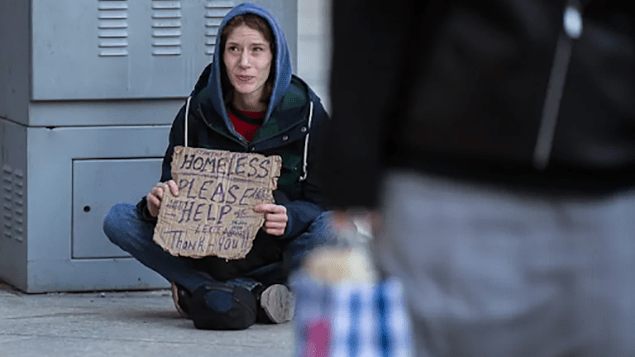
Part one of a series exploring how COVID-19 has worsened disparities amongst homeless minorities.
As often as we’d like to imagine “when this is all over”, we must admit that there is privilege in such a hopeful sentiment; the pretence that aside from the temporary health measures and minor inconveniences we’ve had to face, that the general aspects of our lives will soon return to their objective normal, is rooted in privilege and to an extent, misinformation. Economic decline, increased unemployment rates and shortages across the nation have all led to increased rates of homelessness, a condition that has unfortunately worsened in Canada and is found to have impacted minorities disproportionately. Today I shall discuss how the pandemic has disportionately impacted homeless women in Canada, who not only face oppression by class, but must also endure oppression by gender, as a result of the domestic violence that drives women out of their homes, threatening their survival. According to the World Health Organization, 1 in every 3 women will experience domestic abuse or violence at least once in their lifetime, and according to the Canadian Women’s foundation, on any given night in Canada, 3,491 women and their 2,724 children, must sleep in shelters because they face risks in their own homes. This, combined with the 70% of spousal violence that is not reported to the police (Canadian Women’s Foundation, 2018), makes it instinctively clear that the rates of family and gender based violence greatly impact the percentage of women who are a part of Canada’s homeless population today. To better understand the conditions these women must face, I sought out the leaders of two local long term women’s’ homeless shelters: WINGS of Providence, and Nisa Homes, both of which specialize in providing quality care and programming to women who have faced homelessness, domestic violence and food insecurity. In today’s blog, reflection will take place primarily through utilizing the WINGS’ coordinator’s experiences.
I first interviewed the program coordinator at WINGS, who informed me of their mandate to “accept women with children who are leaving intimate partner abuse” as a second stage shelter organization. The shelter itself offers many services to women, housing wise; there are multiple apartments available, each equipped with security services on site. WINGS’ offers group programming, community referrals and counselling to support victims, and focuses on promoting the womens’ personal growth. When the pandemic was first announced in North America, WINGS was forced to suspend all programs and suddenly was faced with providing aid during a nationwide shortage. While allocating resources was difficult, when asked about what she found to be the biggest issue women must face at the shelters, the coordinator exclaimed that it was dealing with their new terms of isolation that caused the women the most dread. Employees and clients were constantly concerned about who was going to get sick and how fast, with the striking fear of death in their minds as they pondered “what was this gonna mean?” for the future. She identified how women experiencing domestic violence now had to make the difficult decision of choosing between permanently leaving their households – with a heightened fear for their safety and financial stability due to the pandemic, or to alternatively stay where they were and endure abuse in silence. This is not to mention the risks some women have to take to even make the first step of leaving, and the chance that, should they have to return for any reason, they face the threat of being punished for their decision. Often, victims of domestic violence struggle to come forward and have difficulty recognizing patterns of abuse for a multitude of factors. They may choose not to leave based on their children, cultural stigma, financial risks, or simply their own denial. “It’s not as easy as packing a suitcase,” the coordinator starts, “it takes a lot of guts, courage and strength” she continues, emphasizing how important it is to WINGS, to provide women with the right support in handling their situations, especially amidst the virus.
The coordinator stressed that the lack of services available and increased quarantining were seen as imminent threats to the shelter, especially in terms of maintaining stable mental health. She expanded on isolation in explaining how many women felt stuck and even began to resent the shelter, as they were starting to become psychologically affected by the quarantine. The coordinator however, while saddened by the “new normal” the women had to face, wanted to assure them that despite their panic, “We are still here” – that the organization would continue to help women in their time of need. While there were a large portion of staff working remotely, many of the employees, including herself, have remained onsite since March, exhibiting a clear commitment to sustain their mandate. Regular check-ins were conducted to ensure the well being of the women. Aside from the government mandated precautions, WINGS was limiting their group work, increasing individual care, and hosting online events as much as possible. As the WINGS’ shelter consists of a series of apartments, should they show symptoms or test positive, the women were asked to quarantine independently in their own units.
An interesting claim made by the coordinator was that the organization actually experienced reduced rates of incoming women, resulting from the unawareness of the availability of their services. With the abundance of children now staying with WINGS, the shift to online learning in schools meant that WINGS’ had to purchase new devices in order to satisfy learning needs. When group interactions were permitted, the WINGS staff began to host group events, holding pizza nights and providing families with craft and care packages to engage with their children. They even brought in the Easter Bunny to lift the childrens’ spirits. The coordinator explained that with the shut down, all fundraising events had to stop and the main donors of the shelter no longer had the financial means necessary to support WINGS. This resulted in mass community outreaches, in order to meet the growing demand and inflation in necessities for women. “I love Edmonton, we have good friends.” The coordinator expressed her gratitude for local support towards the shelter. With the help of the local community, WINGS’ was able to stay running and meet the increasing demand.
Although WINGS’ as a shelter does not tend to take in homeless women, they recognize that homelessness and domestic violence are not mutually exclusive. WINGS prioritizes womens’ safety, and with an increase in domestic violence cases with isolation, the coordinator admits that at times they did have to redirect women to other shelters, but reassured me that they “Never left them hanging.” They partnered with other organizations to accommodate the consistent transfers, and provided women with viable alternatives and resources for support. In the case that they cannot help someone directly, they ensure to redirect them to available organizations and find someone that can.
With COVID-19, the average women’s stay of six months at the shelter was now increased to a year, resulting from the difficulty to find stable housing or established real estate services. A positive outcome of this was that the women and WINGS’ employees built stronger relationships, and had more time to rehabilitate and heal. Following their departure, the staff at WINGS bid the women farewell and assume they have stable supports in place to independently embark on future endeavours. When asked if WINGS’ as an organization had any stories they recall from the women staying with them, the coordinator made sure to direct me to their website, where there are newsletters with testimonies available for public use. The last question I asked was “What would you say to women struggling to come forward?” to which, she responded:
“Reach out, there is help, we are here, you don’t have to stay away, we all need help, healthy people do..we all need to tell our stories” (WINGS)
WINGS’ accepts volunteers throughout the year, and more information may be found on their linked website. Another way to get involved is to volunteer with local organizations, such as the YWCA, Girl to Girl YWEG (Young Women’s’ Empowerment Group), or the Womens’ Emergency Accommodation Centre (WEAC) in Edmonton, who all aim to reduce the disparities faced locally by women.

Volunteering for charitable organizations and donating to shelters are essential actions valuable to reducing disparities among women who face homelessness. Feel free to utilize the resources below to stay informed and help in any way you can: aid websites, articles, student groups, and organizations are all great places to start & listed below!
Resources
Home
https://endingviolencecanada.org/getting-help-2/
Student Groups
https://www.facebook.com/girltogirlyweg/
Articles
https://www.feministrecovery.ca/the-plan
https://www.refinery29.com/en-us/2020/08/9941797/covid-homeless-women-mothers-children-risk
Works Cited
WINGS of Providence. 2020. Who we are. WINGS of Providence. Retrieved from https://www.wingsofprovidence.ca/who-we-are.aspx
Ali, Nadia. October 2016. Domestic Violence & Homelessness. The Canadian Observatory on Homelessness: Homeless Hub. Retrieved from https://www.homelesshub.ca/blog/domestic-violence-homelessness
World Health Organization. November 2017. Violence against women. World Health Organization. Retrieved from https://www.who.int/news-room/fact-sheets/detail/violence-against-women#:~:text=Global%20estimates%20published%20by%20WHO,violence%20is%20intimate%20partner%20violence.
Canadian Women’s Foundation. February 2018. The Facts about Gender-Based Violence. Canadian Women’s Foundation. Retrieved from https://canadianwomen.org/the-facts/gender-based-violence/#:~:text=Half%20of%20all%20women%20in,since%20the%20age%20of%2016.&text=67%25%20of%20Canadians%20say%20they,experienced%20physical%20or%20sexual%20abuse.&text=3-,Approximately%20every%20six%20days%2C%20a%20woman%20in%20Canada,killed%20by%20her%20intimate%20partner.
Written by: Sara Assaf
Edited by: Erica Kim
 Campus UNICEF